
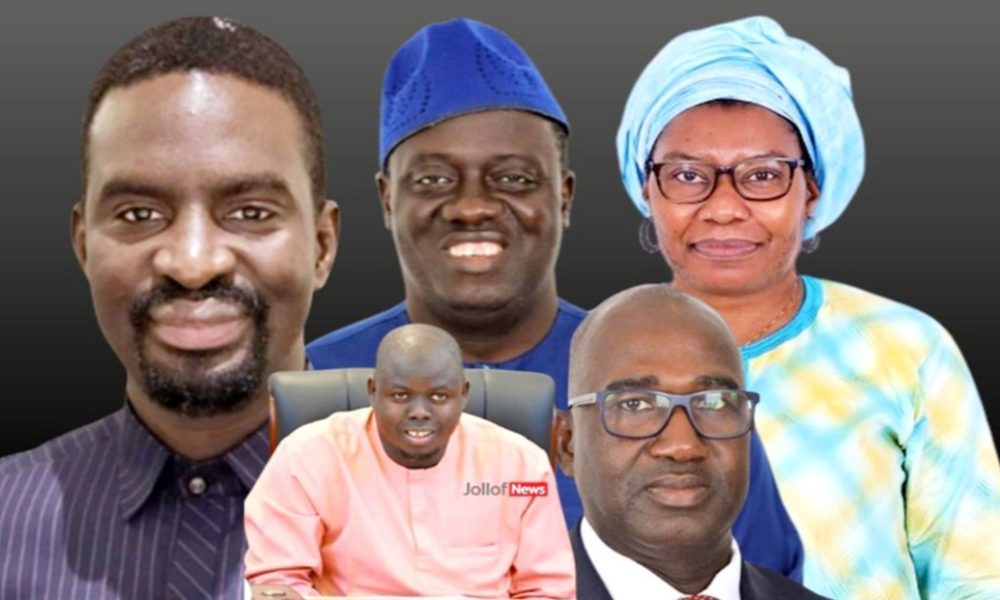

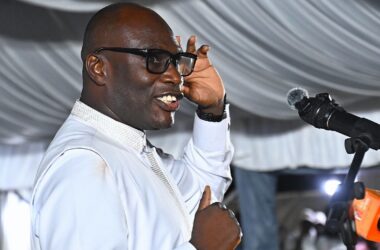
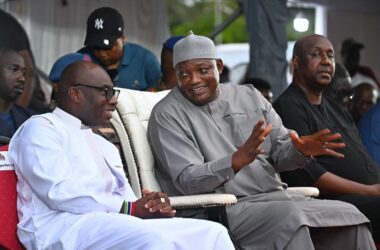
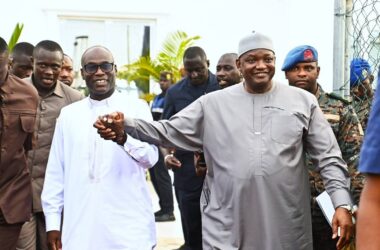
After four months with the Ministry of Trade vacant, senior government officials have confirmed that Mod K. Ceesay, the former Chief of Staff and Minister at the Office of the President, has now been appointed as the country’s new Trade Minister.
Ceesay previously served as permanent secretary at the ministries of Finance, Works and Infrastructure before being appointed Chief of Staff following the 2021 presidential election. He was later elevated to the rank of cabinet minister within the presidency.
However, his time at State House was far from smooth, according to several officials who spoke to JollofNews. Multiple sources described his leadership style as “toxic” and accused him of turning his final months in the presidency into a battleground of administrative fights, fuelled by allegations of favoritism, rivalry and the advancement of close associates.
Before his appointment as Chief of Staff, Ceesay served as permanent secretary at the Ministry of Works under Minister Bai Lamin Jobe. Civil servants claim that he worked to undermine Jobe in hopes of securing the Works Minister position for himself. Although those efforts did not pay off, sources allege that his lobbying strategy earned him the Chief of Staff job instead.
Multiple witnesses claim that while he was at Works, Ceesay frequently made unannounced visits to Mankamang Kunda, spending weekends near President Adama Barrow and presenting himself as a loyal supporter. Despite the controversies surrounding him, insiders believe those visits helped cement the president’s trust. But once he settled in at State House, sources claim he began settling old scores with people he believed had opposed him in the system.
Senior officials insist that while he was Chief of Staff, he continued to wield influence over the Ministry of Works. According to insider accounts, he pushed for his younger cousin, Matar Ceesay, to be promoted to permanent secretary at the ministry.
Matar had originally been brought from Canada at a lower director-level role and was promoted ahead of senior, more qualified personnel including engineer Ebrima Colley, who holds both bachelor’s and master’s degrees from the United States and whom many observers say should have risen to that post years ago.
Insiders also accuse Mod K. Ceesay of overseeing a string of promotions that angered many within the ministry, including the elevation of another close associate (name withheld) to deputy permanent secretary.
His cousin Matar Ceesay later clashed internally with Works Minister Ebrima Sillah. Sillah reportedly complained that Matar was undermining his authority, which led to Matar’s transfer to the Ministry of Interior as permanent secretary. Sources at State House say Mod K. Ceesay encouraged his cousin to protest the transfer by writing a formal letter arguing that his background was in technical fields and that he was not equipped to work at Interior.
Weeks before his reassignment to Trade, insiders claim Ceesay was actively working to bring Matar Ceesay to the presidency this time as Cabinet Secretary.
That move, according to senior officials, was aimed at undermining the current Cabinet Secretary and Head of Civil Service, Mr. Alieu Njie, who is alleged to be Ceesay’s biggest rival. “These two people are at war with each other,” one official told JollofNews. “Everyone knows it here.”
The rivalry reportedly shaped many decisions and appointments inside the presidency. As one source put it: “Real or imagined, Mr. Ceesay sees enemies everywhere.”
His internal conflicts extended further. Another figure caught in the power struggle was Mr. Alieu Loum from the Policy Analysis Unit. Ceesay reportedly promoted Loum through a fast-track path from director to permanent secretary to deputy cabinet secretary. But their relationship later soured.
According to those familiar with the fallout, Ceesay confided to close associates that he regretted ever helping Loum rise in government. One insider described a tense three-way power dynamic involving Njie, Loum and Ceesay. Some officials even referred to what they called a “Fula cabal” within State House, fueling further distrust among top aides.
The friction did not end there. Ceesay is said to have aggressively worked to diminish the role of former Secretary General and Head of Civil Service, Salimata E.T. Touray, who is now Gambia’s ambassador to Ethiopia. After what sources described as a successful campaign to devalue her office, Ceesay allegedly targeted her official vehicle registration number GG0001.
When Touray left the presidency, he and Njie became locked in a battle over the No. 1 and No. 2 plates, a dispute so disruptive that President Barrow eventually intervened.
The source of tension over his role went deeper. The Chief of Staff position was not recognised in the Constitution, meaning that for nearly two years he could attend cabinet meetings but could neither speak nor participate in decision-making. He was eventually asked to resign from the civil service entirely so he could be appointed as a minister without portfolio a transition that also placed him on equal footing with other cabinet ministers.
Observers say his new powers only escalated the internal battles. Communication between Ceesay and Njie reportedly became minimal and strictly formal, with their rivalry “palpable” to everyone in the building.
Sources also claim Ceesay used his influence to block contract renewals for several senior officials approaching retirement age. But one exception was his first cousin and brother-in-law, Mod Secka. Despite Secka’s retirement as permanent secretary at Finance, Ceesay is alleged to have secured him a fresh contract first sending him to Trade before returning him to Finance as permanent secretary on contract.
Meanwhile, some permanent secretaries were placed on leave and told to wait for retirement even though they had not yet reached retirement age.

When rumours of Ceesay’s removal began to circulate, insiders say he and his allies formed groups within State House to lobby First Lady Fatoumatta Bah-Barrow and other influential figures to convince the president to retain him. Multiple sources said the president remained firm and insisted he must go.
JollofNews has learned that President Adama Barrow initially asked Ceesay to move to the Ministry of Defence, but he declined. The president offered him a second chance the Ministry of Trade which he accepted.
In the week leading up to the reshuffle, Ceesay launched what insiders describe as a media campaign to improve his public image.
As he takes on his new role as Trade Minister, many inside government will be watching closely to see whether Mod K. Ceesay leaves behind the controversies that followed him through the halls of power or whether the internal battles that defined his rise continue to shape his future.
Allegations of patronage, rivalry and a relentless grip on influence have created deep divides within the civil service. Whether this new chapter brings stability or more power struggles remains to be seen.