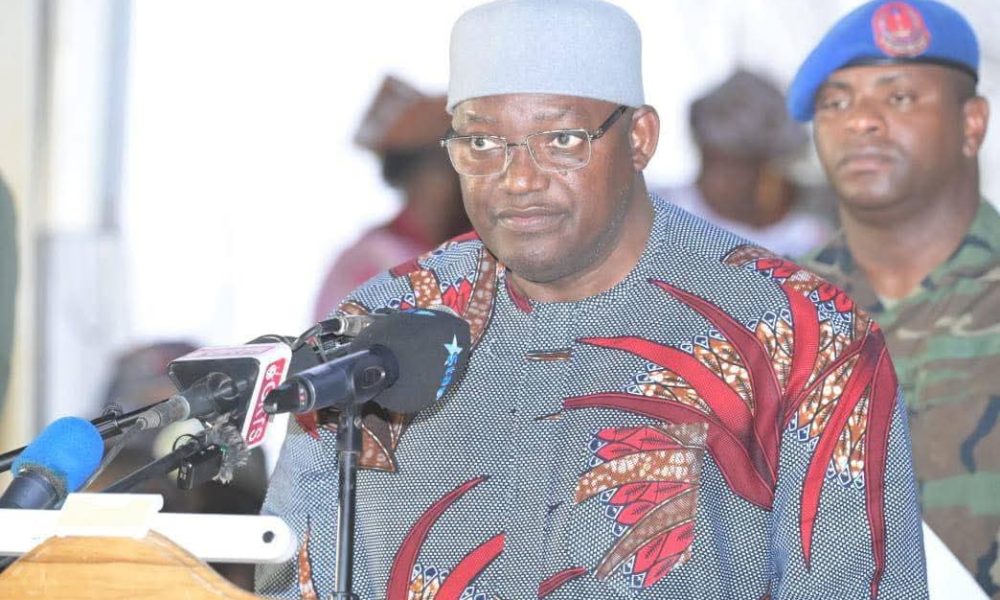




President Adama Barrow has renewed calls for The Gambia to reduce its dependence on imports and prioritise local production, describing it as critical to strengthening the country’s economy and competitiveness.
Speaking during a visit to Gach Global Manufacturing Company’s headquarters in Banjulinding, the president said the country’s heavy reliance on imported goods places unnecessary strain on the economy and limits opportunities for sustainable growth.
“Our dependence on imports makes us vulnerable,” Barrow said, adding that expanding domestic production would not only stabilise the economy but also create jobs and build local capacity.
He praised Gach Global’s investment, describing the project as more than just a factory but an emerging industrial park with the potential to generate significant employment and stimulate economic activity.
According to the president, such private sector initiatives align with the government’s broader strategy to promote industrialisation and reduce unemployment.
Barrow stressed that economic transformation cannot be achieved by government alone. He called for a shift toward citizen-led development, encouraging greater private sector participation in national growth efforts.
“The government will create the enabling environment,” he said, urging Gambians, particularly those in the diaspora with financial capacity, to invest back home. He assured potential investors of government support, including measures to protect and promote citizen participation in business.
The visit forms part of the administration’s wider push to boost local production and strengthen private sector growth.
Recent economic indicators point to cautious optimism. The Gambia’s economy is projected to grow by 5.6 percent in 2026, supported by improved macroeconomic stability, increased agricultural output, and a rebound in tourism.
The 2026 national budget, valued at D36.49 billion, places strong emphasis on human capital development. Government allocations to education, health, and agriculture have risen by 13 percent, with D18.6 billion representing 35.3 percent of the total budget earmarked for those sectors.
Fiscal consolidation also remains a priority. The deficit is projected to narrow to 1 percent of GDP, while debt servicing is expected to account for 30 percent of total expenditure. Tax revenue is forecast to increase by 28 percent, driven largely by digital reforms and strengthened tax administration.
The government says it will continue efforts to mobilise domestic revenue, improve public spending efficiency, and invest in infrastructure and skills development to sustain economic momentum.
For Barrow, investments such as Gach Global’s signal what he believes is a necessary shift: moving from consumption-driven growth to production-led development anchored by Gambian entrepreneurs.