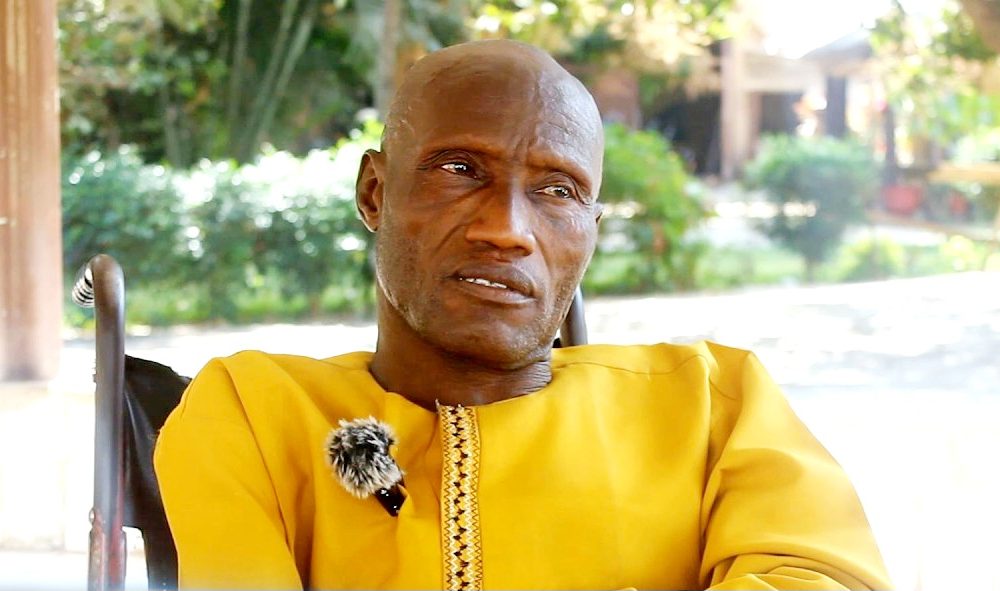



A respected voice in the Gambia’s disabilities rights advocacy Mr. Lamin Manneh has lamented that persons with disabilities are still struggling with access issues to immigration services and offices.
However, top officials of the Gambia Immigration Department (GID) made a strong promise to factor in the needs of persons with disabilities in the department’s policies and programs.
Manneh, who is the Chairman and Secretary-General of National Organisation for Disables and Orphans (NODO), last Thursday led a delegation of NODO officials to the GID HQ in Banjul, where they held a constructive meeting with officials around immigration services vis-a-vis the differently-abled people.
The Deputy Director of the GID, Madam Hulay Jallow-Cham, the Commissioner of Administration, Babucarr Sanyang, and Public Relations Officer, Inspector Siman Lowe, were among the GID officials that attended the meeting.
In his address, Hon. Lamin Manneh informed the GID officials that access to immigration services “still poses a huge challenge” to people with disabilities. He explained that the GID’s physical infrastructure such as offices and ID card and passport issuing centres are not disability-friendly.
Manneh recalled an instance in which a person with disability has been hiring a taxi for three months, but could not access the immigration building and services.
The NODO chair also called for compassion, care and empathy on the part of immigration officers in the treatment of people with disabilities.
He referenced the Disability Act, which mandates the state to accord people with disabilities all their rights.
He highlighted the necessity of having in mind persons with disabilities during the conceptualization and design of immigration structures.
According to Manneh, the meeting with the upper echelons of the immigration department was both timely and enlightening for both sides.
“I know you don’t know all these issues affecting persons with disabilities, but I know with your commitment to do the best for the immigration department and the disabled, things will improve,” he pointed out.
The NODO chair made a disclosure about his organization’s readiness to roll out training programs for GID officers and other stakeholders around disability issues.
“We have a consultancy to train officers to know how to handle our issues. Our issues are different, but we all want to do the best for this country. I always disagree when people call us disabled. We are just differently-abled,” he highlighted.
Manneh also revealed that NODO will implement a project, whose end-goal is to remove persons with disabilities from the street and prepare them to become economically independent to lead a dignified life.
The NODO SG expressed appreciation to the GID for granting honour to their request for an audience by granting them an audience.
“I really appreciate the audience and we believe we are speaking to the right officials that would convey our message to the DG for action. I thank your management. We wrote to you and in three days, you responded,” he stated.
For his part, the Commissioner of Administration at the GID, Babucarr Sanyang, described the meeting as a glaring indication of GID’s commitment to the disabled.
“We will factor the disabled in our new HQ building design. We are happy that you have come and we will take it from here,” he added.
He gave the assurance of GID’s willingness to integrate into its policies and programs.
He also promised that the GID will provide dedicated officers for persons with disabilities across its offices and theatres of operations.
One of the women speakers from NODO said:”We want to thank Hon. Lamin Manneh for his role in the improvement of the welfare of persons with disabilities. We encounter a lot of emotional, psychological and physical challenges in our daily life,” she highlighted as she called for compassionate handling of the issues of the differently-abled people.
The deputy immigration chief described the meeting as “a great honour”.
“I think this is the first time that we have this kind of meeting. We always strive to weave in the immigration services the welfare of people with disabilities, the elderly, pregnant women, the sick and children either at the port or airport,” Madam Jallow-Cham highlighted.
She stated that “it’s our responsibility to make sure we sensitise the public about the issues of the disabled”.
“We need to accept each other,” she added.
She reassured NODO officials that the matters raised during the meeting are not difficult issues to tackle.
“I think these are minor issues that can be solved. We will make sure the message is amplified within the ranks of the GID. We have a training school.
We currently have 500 recruits and we can invite you to the school for sensitisation activities,” she stated.
Madam Cham also promised that persons with disabilities would be factored in the structural design of the GID’s upcoming infrastructures.