

Gambia’s main opposition United Democratic Party (UDP) has formally rejected the draft eligibility guidelines and structural framework proposed by the Coalition Movement Committee (CMC), arguing that key provisions are unfair, unconstitutional, and specifically designed to disadvantage the party and its leader, Lawyer Ousainou Darboe.
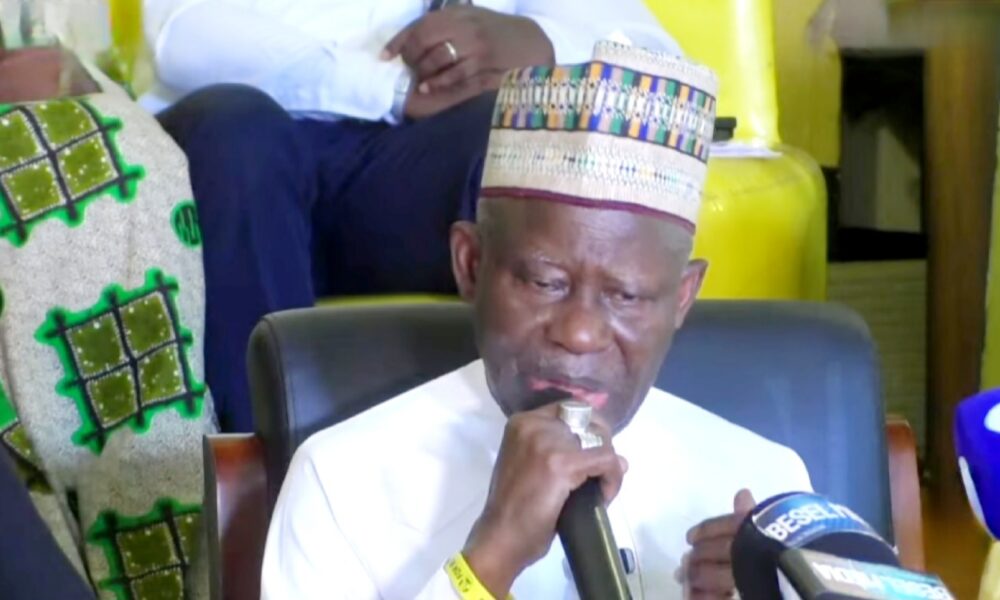
Speaking during a press conference at the UDP headquarters in Kotu, Darboe outlined the party’s objections to the proposed coalition arrangements, insisting that while the UDP remains committed to opposition cooperation, it cannot endorse a framework that it believes undermines democratic fairness and constitutional governance.
At the centre of the dispute is an eligibility requirement for prospective coalition flag-bearers. The proposed guideline stipulates that any candidate seeking to lead the coalition must have a “strictly verifiable history” of supporting coalition efforts and must not have a record of “sabotaging coalition efforts, undermining joint candidates, or defecting for personal gain.”
The UDP leadership strongly objected to the clause, arguing that it was deliberately crafted to exclude Darboe by reviving long-standing political narratives surrounding the collapse of Coalition 2016.
“Those who oppose the United Democratic Party have carried a message throughout the country and the world that Coalition 2016 failed because of the United Democratic Party,” Darboe said. “You can see quite clearly that this is directed at Ousainou Darboe and no other person. How can we accept such criteria for the selection of a flag-bearer?”
Darboe argued that accepting such a provision would place the UDP at a permanent disadvantage during coalition negotiations, forcing the party to continually defend itself against political accusations rather than focusing on policies and national development.
The UDP also raised constitutional concerns over the coalition’s proposed governance model, particularly the idea of a candidate-led alliance overseen by a governing council with decision-making authority.
Darboe maintained that any coalition agreement must operate strictly within the framework of The Gambia’s Constitution and warned against creating parallel structures that could interfere with the constitutional powers of an elected president.
He questioned the legality of establishing an external governing council to supervise executive decisions, describing the proposal as incompatible with the country’s constitutional order.
According to the veteran opposition leader, the UDP is unwilling to sacrifice constitutional principles for short-term political convenience, insisting that any future coalition arrangement must respect the powers and responsibilities vested in the presidency under the Constitution.
Another major concern raised by the party relates to the voting arrangements within the Coalition Movement Committee.
The UDP criticised the proposal to grant equal voting rights to long-established political parties and newly formed civil society organisations (CSOs) or recently created political movements, arguing that such an arrangement fails to reflect political realities.
“You want to put UDP, after investing 30 years in the politics of this country, having structures in every part of this country, having members of the National Assembly, mayors, and councillors, at the same level as a CSO or a political movement formed in 2026? Is that fairness?” Darboe asked.
The party argued that coalition partners should be recognised according to their organisational capacity, electoral track record, and national presence, rather than being treated as equal regardless of their political experience or representation.
Despite its reservations, the UDP reiterated its commitment to dialogue and opposition cooperation aimed at advancing democratic change in The Gambia. However, party leaders stressed that any coalition must be built on principles of fairness, mutual respect, and constitutional legality rather than rules they believe unfairly disadvantage particular participants.