
The newly forged political alliance between the ruling National People’s Party (NPP) and the Gambia Democratic Congress (GDC) has ignited widespread speculation over the possible distribution of senior government positions should the partnership emerge victorious in the 2026 presidential election.
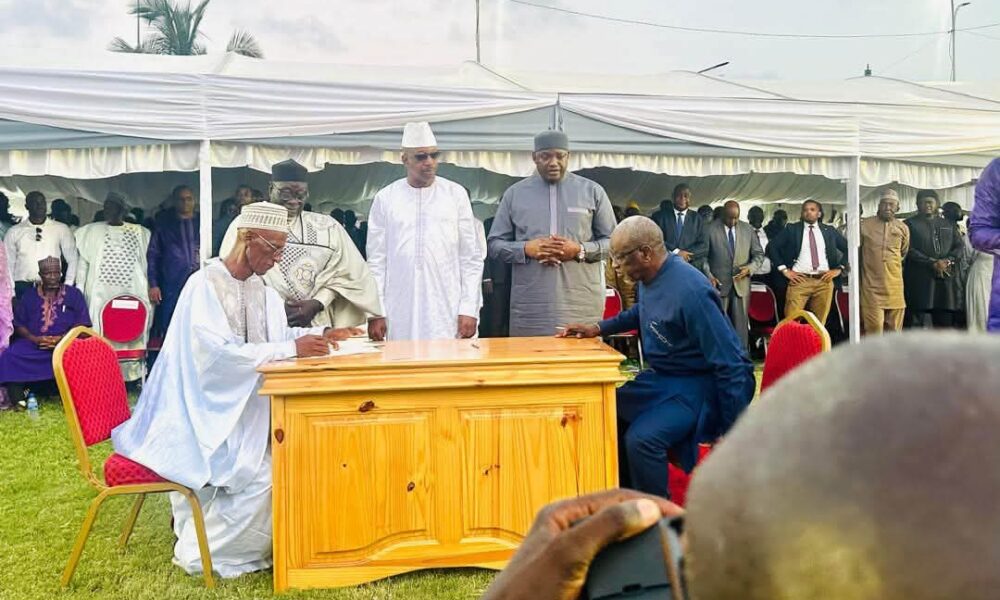
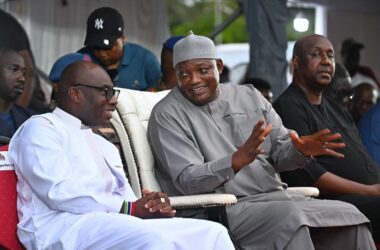
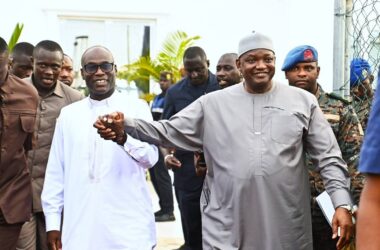
The Memorandum of Understanding (MoU), signed on Wednesday at the State House in Banjul by President Adama Barrow and GDC leader Mamma Kandeh, marks one of the most significant political developments ahead of December’s presidential race.
However, while the ceremony projected unity and a shared commitment to national development, both parties declined to disclose the contents of the agreement, leaving many Gambians questioning the political concessions and governance arrangements underpinning the alliance.
The lack of transparency has fuelled intense public debate, with political commentators and observers offering varying interpretations of the deal. Among the most widely discussed claims is the possibility that Mamma Kandeh could assume the office of Vice President should the alliance retain power after the 2026 election. Others believe the agreement may include a broader power-sharing framework involving cabinet appointments and strategic government positions.
Neither the NPP nor the GDC has confirmed these claims, and no official details have been released regarding the terms of the MoU.
Speaking during the signing ceremony, President Adama Barrow described the alliance as a partnership founded on national interest rather than electoral expediency.
“This historic event is not simply about political cooperation or political convenience proposed to win elections, as many may believe. Rather, all key decision-makers and progressive Gambian citizens appreciate this political dynamic as a genuine commitment to put The Gambia and our shared future first,” President Barrow said.
Mamma Kandeh, addressing party officials, supporters and invited guests, defended GDC’s decade-long role in opposition politics, insisting that the party’s criticism of successive governments had always been motivated by patriotism and the pursuit of national progress.
“Our criticisms were never personal, nor were they motivated by hatred or bitterness towards any individual or government. They were driven by patriotism and our unwavering commitment to building a stronger, fairer, and more prosperous Gambia,” Kandeh said.
Although both leaders presented the alliance as a vehicle for national unity, stability and inclusive development, the absence of publicly available details has left key questions unanswered. Political analysts say NPP and GDC will likely face increasing pressure to clarify the terms of the agreement, particularly on issues relating to governance, decision-making and the allocation of senior government positions if the alliance wins the December 2026 election.
For now, the MoU has not only reshaped the country’s political landscape but also triggered intense public interest over what many believe could be one of the most consequential power-sharing arrangements in The Gambia’s democratic history.