
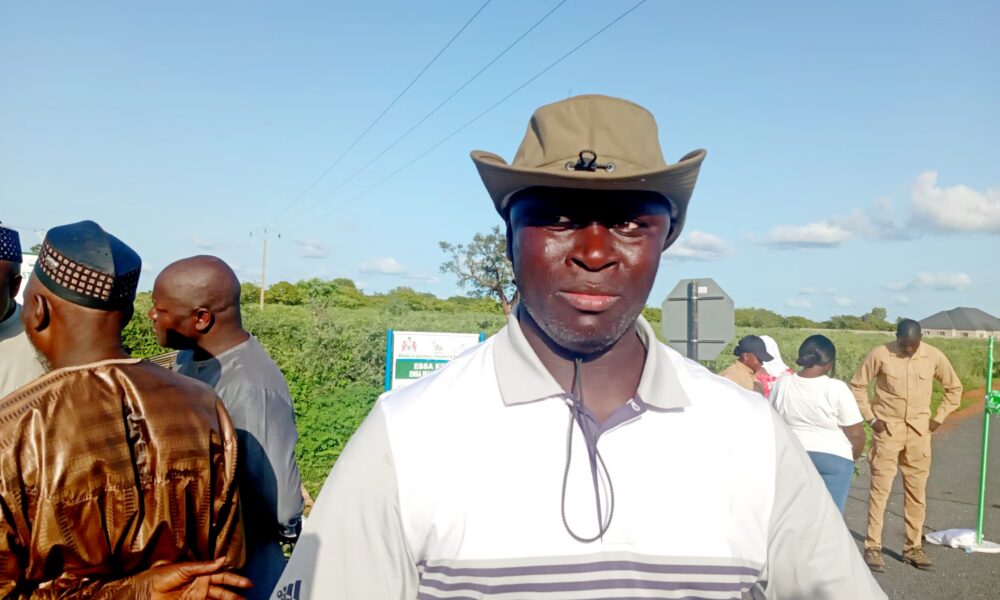



Adviser on Digital Economy Ahmed Gitteh has described the completion of the Salikenni Road in the Central Baddibu Constituency as a significant milestone, arguing that the project demonstrates the government’s commitment to delivering development regardless of political affiliation.
Speaking on the sidelines of the official inauguration of the road, Gitteh commended President Adama Barrow’s administration for completing what he described as a long-standing infrastructure need that had remained unresolved under previous governments.
Gitteh said Salikenni had endured inadequate road access since The Gambia gained independence, despite the community producing several prominent political figures over the years, including a former vice president, cabinet ministers and National Assembly Members.
He said the completion of the road was particularly significant given the political dynamics of the constituency, where the sitting National Assembly Member belongs to the opposition United Democratic Party (UDP).
According to Gitteh, political differences should not determine whether communities benefit from government development projects.
“Whether a constituency votes for President Barrow or not, any part of the country that needs development will be served as expected,” he said.
Gitteh argued that the Salikenni Road illustrates what he described as the National People’s Party (NPP) administration’s non-partisan approach to national development.
He also responded to critics who, he said, underestimate the importance of road infrastructure, drawing on his personal experiences growing up in the area.
He recalled a time when farmers depended heavily on horse carts to transport agricultural produce to the main highway because of the poor condition of local roads.
According to Gitteh, the difficult terrain often resulted in agricultural produce, particularly tomatoes, being damaged or spoiled before reaching the main highway and markets.
He said the newly paved road would significantly improve transportation, allowing farmers to move their produce more efficiently while reducing losses and improving their access to markets.
Beyond agriculture, Gitteh said improved road connectivity could also have a positive impact on property values and stimulate economic activity in communities along major transport routes.
He maintained that a strong road network is essential to achieving sustainable national development, particularly in rural areas where farmers depend on reliable transportation to access markets.
“Connecting farmers to markets remains a central priority,” Gitteh said, stressing that improved roads can help strengthen local economies and create wider opportunities for rural communities.