




President Adama Barrow has stepped up efforts to address Gambia’s worsening electricity crisis, securing support from Senegal and Guinea as his government works to restore a more reliable power supply across the country.
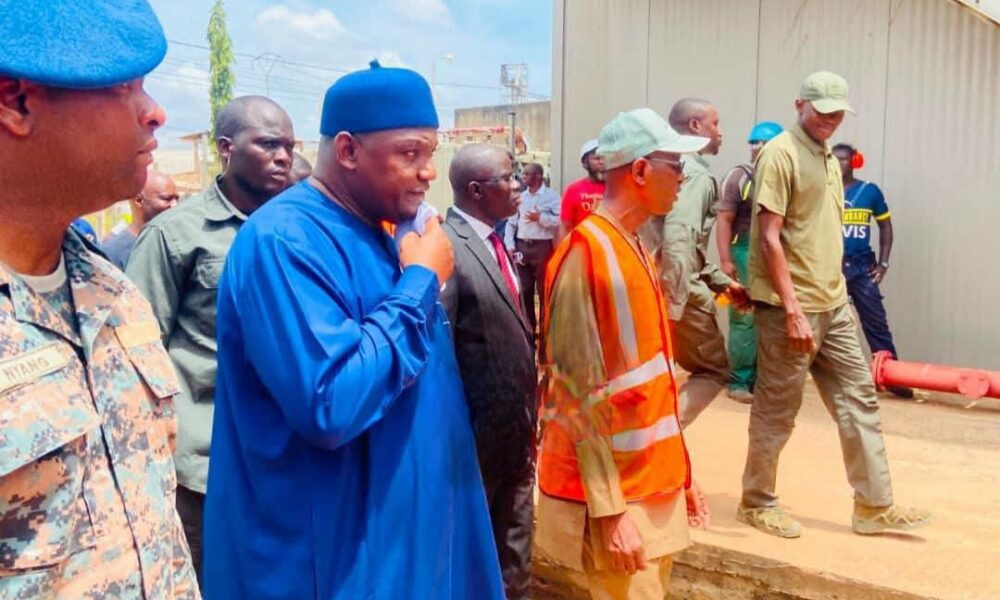
Speaking during an on-site inspection of National Water and Electricity Company (NAWEC) facilities, President Barrow assured Gambians that his administration is taking immediate measures to tackle the persistent power outages and restore 24-hour electricity by the end of October.
As part of the emergency response, President Barrow said he spoke with Senegalese President Bassirou Diomaye Faye earlier in the day to seek assistance in addressing Gambia’s immediate power shortfall.
According to President Barrow, President Faye has agreed to support The Gambia, with a high-level meeting scheduled in Senegal to discuss immediate cross-border energy assistance and longer-term measures to strengthen the country’s electricity supply.
The Gambian leader also disclosed that recent discussions with Guinean authorities had been successful, while engagements with other regional partners are continuing as the government explores additional options to stabilise the national power grid.
The latest diplomatic efforts come amid growing public frustration over prolonged and frequent electricity outages, which have disrupted households, businesses and essential services across the country.
President Barrow acknowledged the difficulties faced by citizens and appealed for patience as the government works to address the crisis.
Speaking during the NAWEC inspection, the President said resolving the country’s electricity deficit remains one of his administration’s top priorities.
“My government is working tirelessly to bring the electricity supply back to normal,” President Barrow assured the public.
He said he was speaking “from his heart” in appealing to Gambians to remain patient while emergency measures and infrastructure interventions are pursued.
The government’s engagement with Senegal and Guinea signals an increasingly regional approach to addressing Gambia’s energy challenges, while the October deadline places renewed pressure on the administration to deliver a sustained improvement in electricity supply.
For many Gambians, the effectiveness of these measures will ultimately be judged by whether they translate into a stable and dependable power supply after months of persistent outages.