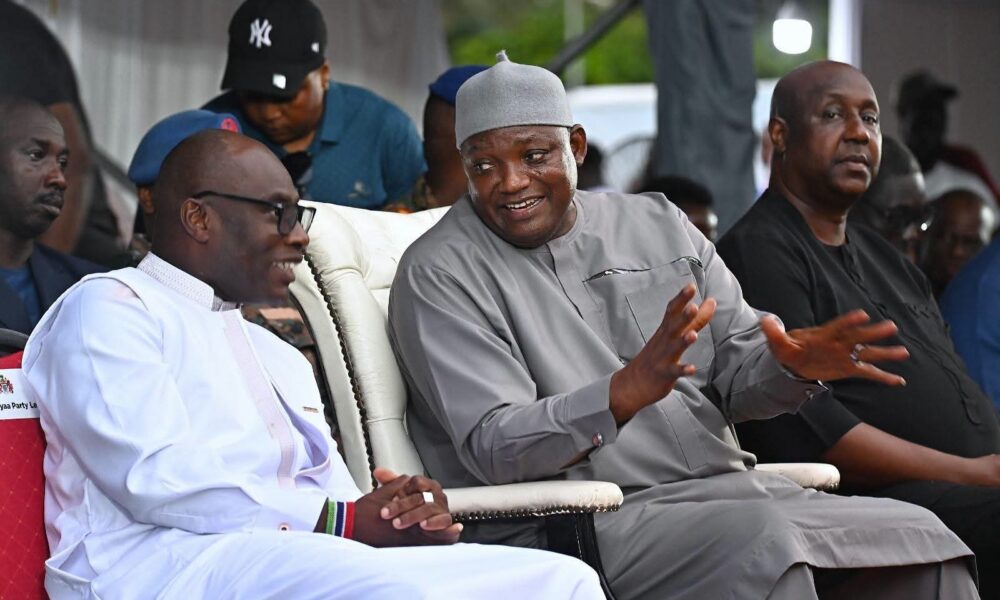

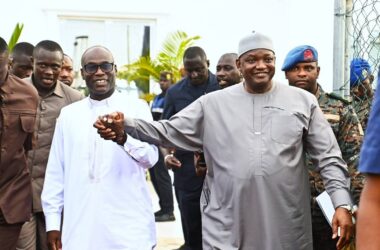
Presidential candidate Essa Mbye Faal has defended his political alliance with President Adama Barrow’s ruling National People’s Party (NPP), saying the partnership is based on agreed reforms and policy solutions to some of The Gambia’s longstanding challenges.
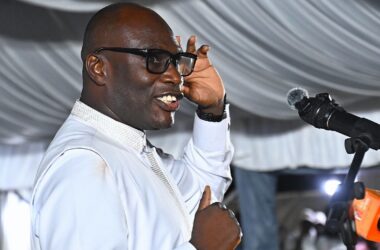
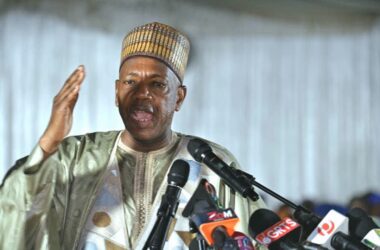
Speaking on West Coast Radio’s flagship morning programme, Coffee Time, Faal sought to clarify the substance of the Memorandum of Understanding (MOU) signed between his APP-Sobeya platform and the NPP, following public debate over the alliance ahead of the 2026 presidential election.
Faal said the agreement should not be interpreted as an abandonment of the principles and issues he campaigned on, arguing instead that the MOU reflects areas where both sides reached consensus on how those challenges should be addressed.
“All the problems that I had campaigned about are issues to which the Barrow team and our team have agreed a solution, and it is those solutions that we put on the MOU,” Faal said.
He stressed that the solutions contained in the agreement were not presented as exclusively his own proposals, but were the product of discussions between the two political sides.
“I am not saying that these are my own solutions exclusively. No, I said we have discussed and agreed that these are the solutions,” he added.
Constitutional Reform and Transitional Justice
Among the key areas highlighted by Faal are constitutional reform, transitional justice, anti-corruption and agricultural development.
On constitutional reform, Faal said the country needs to complete the process of establishing a new constitutional framework.
“We don’t have the constitution we want. Let us pass a new constitution,” he said, indicating that constitutional reform remains one of the areas covered by the agreement.
Faal also placed emphasis on the implementation of outstanding recommendations from the Truth, Reconciliation and Reparations Commission (TRRC), where he served as Lead Counsel.
While acknowledging progress on the transitional justice process, he argued that significant recommendations remain to be implemented.
“The TRRC recommendations have not been fully implemented. Let’s agree to have those outstanding implemented,” Faal said.
Anti-Corruption Commission
On corruption, Faal said the MOU provides for the operationalisation of the recently established Anti-Corruption Commission, which he identified as a key component of the reform agenda.
He criticised what he described as limited prosecution of corruption cases in the past, while pointing to the need for stronger institutional enforcement.
“The anti-corruption I have said that nobody’s been prosecuted apart from this guy, Dr. Banja,” Faal said.
He added that the agreement calls for the new Anti-Corruption Commission established under the Barrow administration to be made operational “as soon as possible.”
Agriculture and Food Security
Faal also highlighted agriculture and food security as another area of common ground between the two political camps.
He argued that The Gambia’s heavy reliance on imported food places pressure on the country’s finances and that greater investment should be directed towards domestic agricultural production.
“I had always criticised that we spend too much money importing food; we must ensure the right investments would be made in agriculture,” he said.
According to Faal, the objective of the alliance is to move beyond political rhetoric and establish concrete measures capable of addressing concerns raised by Gambians.
“So for me, we were trying to find mutually agreed solutions to our concerns, and our concerns everybody knows,” he said.
The APP-Sobeya/NPP agreement has generated considerable public discussion, particularly over how Faal’s decision to join forces with the incumbent administration aligns with the positions he advanced during his presidential campaign.
Faal, however, maintains that the MOU represents an attempt to secure commitments on the reforms he has consistently advocated rather than a departure from them.