

Response To S. Chopet: A Dinner Is Not the Problem Our Democratic Anxiety Is. Critics miss the point: the real test of press freedom is not avoiding the President’s table, but ensuring journalists can question him fearlessly the next morning
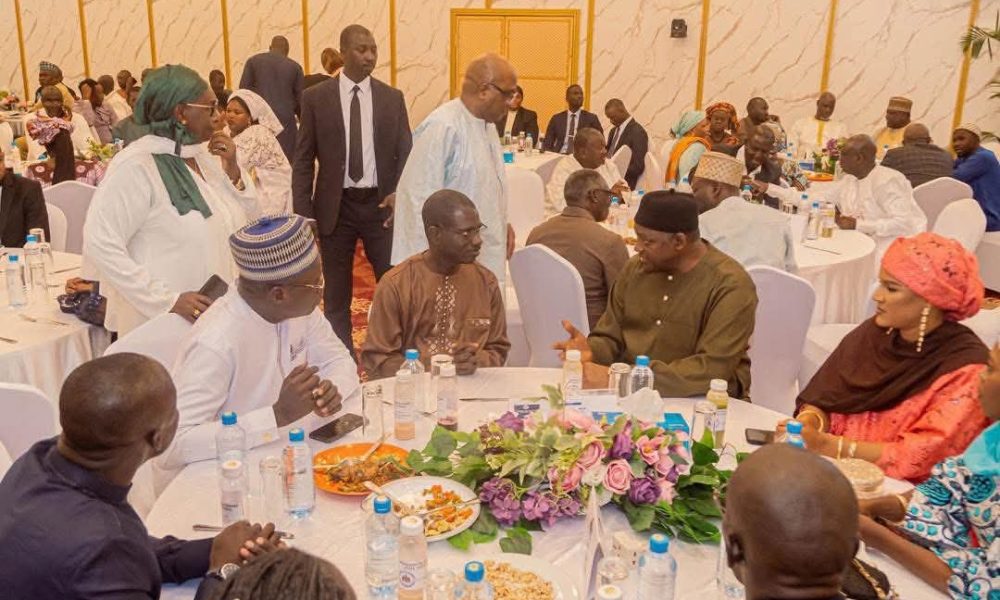
The argument that Gambians are “too easily appeased” because journalists attended a presidential dinner misunderstands both the purpose of the event and the nature of democratic engagement. No serious journalist believes that a plate of food is a substitute for press freedom. What the Barrow Presidential Media Dinner represents is not appeasement—it is access, openness, and a symbolic break from a past where journalists could not even approach the State House without fear. To reduce such an event to a mere meal is to trivialize the long, painful journey from repression to democratic space.
Under Yahya Jammeh, journalists were not debating whether a dinner was meaningful; they were debating how to stay alive. Independent media houses were burned, editors exiled, reporters jailed, and some never returned home. The State House was a fortress of intimidation, not a venue for dialogue. Today, journalists walk into the State House openly, speak freely, and walk out unharmed. That alone is a democratic evolution worth acknowledging. Engagement with the presidency is not a betrayal of independence; it is a sign that the climate of fear has been replaced by a culture of openness.
Critics who dismiss the dinner as a distraction ignore the global democratic context. In the United States, the White House Correspondents’ Dinner is a century-old tradition where journalists and the President meet in a spirit of openness. In the United Kingdom, Downing Street hosts media receptions. In South Africa, Ghana, Kenya, Senegal, and across the Commonwealth, similar engagements occur without controversy. These events do not weaken the press; they normalize dialogue between the state and the fourth estate. A confident democracy does not fear conversation.
It is also important to reject the notion that Gambian journalists are “appeased” by food. Such a claim insults their professionalism and reduces them to children incapable of independent judgment. Journalists are constitutional actors with a duty to question power before, during, and after any engagement. Integrity is not determined by the menu; it is determined by the courage to ask hard questions. A principled journalist does not lose independence by entering the State House. A compromised journalist was compromised long before the invitation arrived.
The critic’s argument also omits the structural reforms President Barrow has undertaken—reforms that no Gambian leader before him attempted. He allocated land for a permanent home for the Gambia Press Union, a historic investment in institutional independence. He signed the Freedom of Information Act, giving journalists legal access to public information. He reopened media houses once shuttered by fear and ended the era of arbitrary arrests and disappearances of journalists. These are not symbolic gestures; they are institutional gains that strengthen the foundations of press freedom.
However, there is a crucial dimension missing from the critic’s analysis: the responsibility of journalists, media houses, and journalist associations to formally request interviews, press briefings, and press conferences. In every functioning democracy, there is a standard protocol. Requests for presidential interviews or press conferences are submitted through the Minister of Information, the Director of Press and Public Relations at the State House, or the official communications channels of the presidency. This is how it works in Washington, London, Pretoria, Nairobi, Accra, and Dakar. The question must therefore be asked: have Gambian journalists formally requested a press conference? Have media houses submitted interview requests through the proper channels? Have journalist associations invoked their institutional mandate to demand structured engagement? A press conference is not arranged by presidential whim; it is coordinated by handlers, press officers, and communication directors. If the requests are not made, the process does not begin.
It is true that the President should hold regular press conferences, broaden access to all media houses, and subject himself to open questioning. These expectations are valid and necessary for a healthy democracy. But they do not negate the value of a dinner that brings the press and the presidency into the same room for the first time in decades without fear or hostility. The dinner is not the destination; it is a step. A step toward more transparency, more access, more accountability, and more confidence between the state and the fourth estate.
The critic is right to demand more from the presidency, but wrong to dismiss a democratic opening simply because it does not solve every problem at once. The Gambia must learn to walk and demand better at the same time. Engagement is not appeasement. Dialogue is not surrender. And a democracy that fears conversation is a democracy still living in yesterday’s shadows. The Barrow Presidential Media Dinner should be seen for what it is: a symbolic bridge, a gesture of openness, and a reminder that The Gambia is no longer a country where journalists must whisper in fear. The work of strengthening press freedom continues—but it begins with access, not avoidance.