




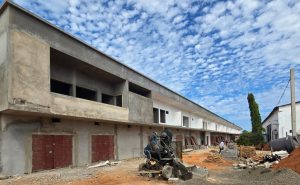
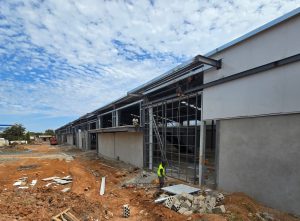
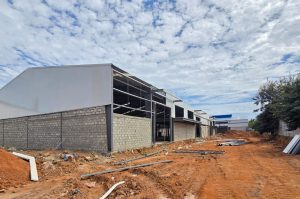
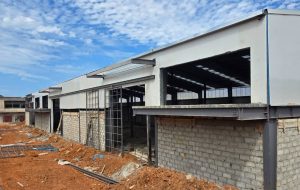
The Gambia is close to commissioning its first purpose-built Agro-Industrial Hub, a major infrastructure project expected to strengthen local manufacturing, reduce imports, and create new employment opportunities. The facility is now about 90 percent complete and is being positioned as a central pillar in the country’s agro-industrial transformation.
The hub features fourteen modern manufacturing and processing units, each covering 500 square metres. These units are designed specifically for food and agro-related production, targeting goods that are widely consumed in The Gambia but largely imported. Planned outputs include juices, ketchup, vinegar, and other processed food and consumer products derived from local agricultural inputs.
Built to modern industrial standards, the complex is equipped with shared infrastructure to support efficient operations. This includes solar power systems, an autonomous high-pressure fire suppression system, and a fully paved internal road network to ease movement and logistics within the hub. Some of the units will be operated directly by the developers, while others will be leased to independent manufacturers seeking ready-to-use production facilities.
Beyond production, the project has been designed as a fully integrated industrial ecosystem. A large administrative and commercial block at the front of the site will house around 32 outlet stores and showrooms. These spaces will allow manufacturers within the hub to display and sell their products directly to wholesalers, distributors, and consumers.
Office spaces on the upper floors of the same building will serve manufacturers operating within the hub as well as other businesses linked to agro-processing, logistics, and industrial services. Additional facilities have also been incorporated. The eastern wing includes a restaurant area and a prayer room, while the western wing has been reserved for service providers such as a bank, pharmacy, logistics or travel services, and other support businesses intended to meet the daily needs of companies on site.
To support its workforce, the hub includes eleven accommodation units within the complex. These are primarily intended for staff working at the facility, including expatriate technical and managerial personnel, helping to ease housing pressures and improve operational efficiency for resident companies.
The overall concept is to create a one-stop centre for agro-industrial activity in The Gambia, bringing together manufacturing, administration, retail, logistics, services, and staff accommodation in a single location. Developers believe this clustering approach will reduce operating costs, improve productivity, and encourage collaboration among manufacturers.

Speaking on the vision behind the project, Abubakary Jawara, Chairman of Gach Group, said the idea grew out of practical experience in local processing. He explained that after operating a tomato paste processing factory since 2018, the group identified the limitations of stand-alone factories and the need for a purpose-built ecosystem where production, services, and distribution are closely linked.
He said the hub aims to drive value addition, reduce dependence on imports, strengthen local supply chains, and create sustainable jobs for Gambians.
From a broader development perspective, the hub is expected to play a significant role in strengthening the country’s agro-industrial value chain. By enabling local processing of agricultural produce, it is expected to increase value addition, reduce post-harvest losses, and provide more reliable markets for farmers. This, in turn, could support agricultural growth and contribute to improved food security.
Job creation is also a key expectation. Once fully operational, the hub is projected to generate a substantial number of direct jobs in manufacturing, administration, retail, logistics, and facility management. Indirect employment is also expected to grow through supply chains, transport services, raw material sourcing, maintenance, and product distribution.
As the project nears completion, there is growing optimism that the Agro-Industrial Hub will mark a new phase in The Gambia’s industrial development. If successful, it is expected to stand as a flagship example of how targeted investment in infrastructure can stimulate local production, promote value addition, and support long-term economic growth.