



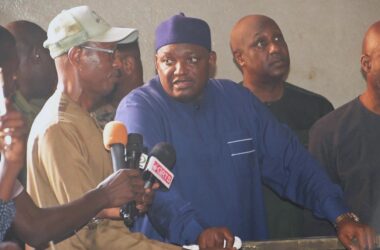
There appears to be no end in sight to the turmoil in the Gambia’s cement market, but Jah Multi-factory’s proprietor and CEO Hamidou Jah told JollofNews on Sunday evening that his outfit “is not responsible” for the current cement shortage or price volatility as alleged in a lot of quarters.
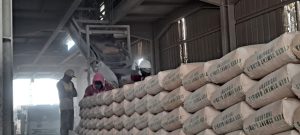
The cement conundrum is now a subject of passionate public debate as the country continues to experience on-and-off cement scarcities and galloping prices.
Before the increment of the levy on a bag of imported cement from D30 to D180 by the Gambia government earlier this year, a bag of cement was traded at the retail price of less than D350 at some places.
However, cement is now reportedly retailed at over D500 in some parts of the country due to the sporadic acute shortages.
Currently, the population is struggling to access cement and the prices of the available stock have apparently shot through the roof in parts of the country.
Many apportioned the lion’s share of the blame to the Gambia government for the excruciating experience that Gambians have been faced with since the introduction of its trade levy while others accused Jah Oil of having a hand in it.
“Jah Oil is not responsible for any cement shortage as we speak,” Mr. Hamidou Jah explained to JollofNews. “As we speak, we have two vessels at the anchorage but they cannot berth because the channel is 9.5m and our vessels need about 13.5m depth. We are using a 4000-bag capacity boat to transport cement from the mother vessels to reduce their cargoes as well as to try to keep the supply chain uninterrupted. This is what we have been doing, but bad weather continued to hamper our efforts these days,” he further explained.
Mr. Jah reiterated that the company “has two vessels at sea”, each carrying over 50 tons of cement.
“We currently have two vessels; one carrying 59,000 tons of cement while the other is loaded with 55,000 tons,” he restated.

Mr. Jah hinted that the current navigation issues faced by the two cement vessels at the anchorage could have been avoided if the Banjul Port’s draft channel was dredged to accommodate bigger ships.
Meanwhile, the huge chunk of the Banjul Port was ceded to Turkish company Al-Bayrak to, among others, deal with the perennial sedimentation at the port. The Banjul Port is located on an estuary and this renders it prone to continuous siltation. And as part of the Gambia government/Al-Bayrak contract, the company must embark on constant dredging of the channel to enhance port efficiency.
However the Turkish, who brought only seven cargo handling machines into the country since taking over 80% of port operations, could not rely on GPA’s Samo and Malo for dredging as the sea-crafts were reportedly out of commission.
The Gambia government said the cement levy was introduced to protect local cement “producers” from the might of international cement corporations.