
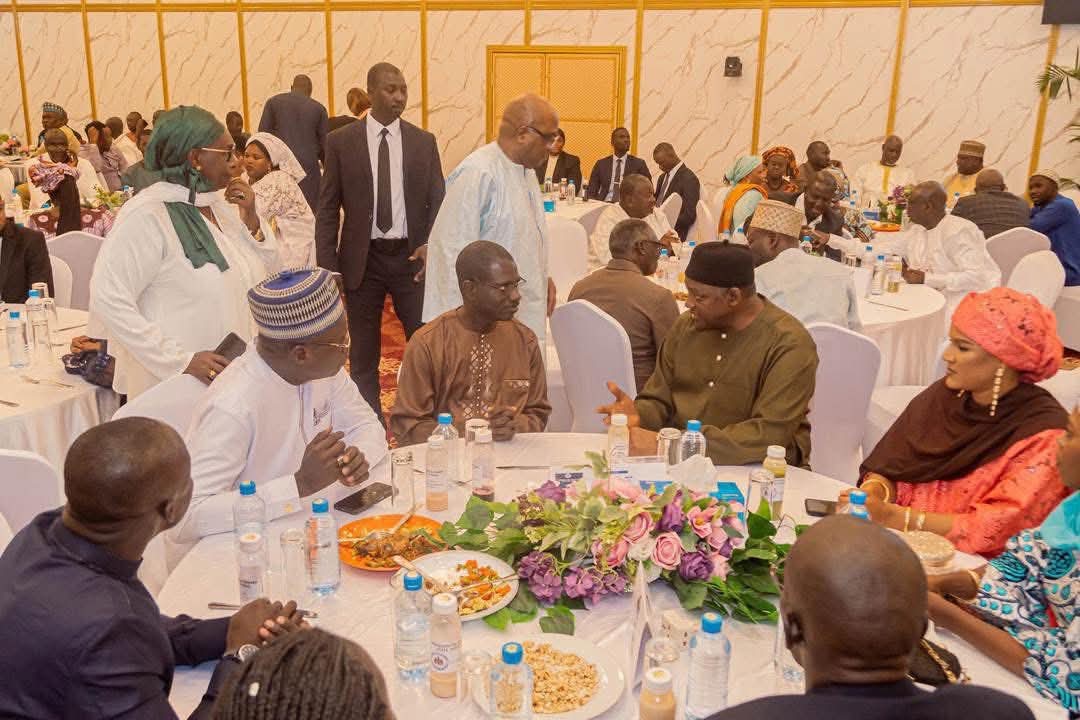
Building bridges between the press and government is essential for democracy. The Barrow Presidential Media Dinner exemplifies this by fostering transparency, trust, and an environment where journalists uphold ethics and integrity in their reporting. This event’s true value lies in its role as a catalyst for open dialogue between the media and the government.
The Barrow Presidential Media Dinner at the State House is not a trivial social gathering. It is a democratic ritual, one that many Gambians never imagined possible during Yahya Jammeh’s authoritarian rule. Under Jammeh, the relationship between the presidency and independent journalists was defined by fear, hostility, and repression.
A simple handshake with the President could be interpreted as complicity or, worse, place a journalist’s life in danger. The ability for journalists to walk into the State House openly, without fear, and engage the President in conversation is itself a democratic achievement and a sign of how far the country has come.
I speak not from theory, but from lived experience. I was with the late Deyda Hydara and Mr Demba Jawo, founding members of the All Africa Editors Forum, when we held a retreat with then-President Thabo Mbeki in South Africa. I attended the Commonwealth Heads of Government Meetings where journalists interacted freely with Presidents and Heads of Government. These engagements were normal, professional, and expected in democratic societies.
Ironically, the first time I met Yahya Jammeh in person was not in The Gambia, but at an international meeting abroad. At home, such proximity between the President and independent journalists was unthinkable. This is why the Barrow Presidential Media Dinner should not be dismissed or trivialised. It is a democratic gain, a symbolic restoration of normalcy, and a reminder that journalism and government need not exist in perpetual hostility.
Those criticising the dinner should look beyond our borders. In the United States, the White House Correspondents’ Dinner is an annual tradition dating back more than a century. Presidents from both parties attend, joke with journalists, and celebrate the First Amendment. In the United Kingdom, the Prime Minister regularly hosts media receptions at Downing Street. In South Africa, Kenya, Ghana, Senegal, and across the Commonwealth, similar engagements occur without controversy. These events do not compromise press freedom; they affirm it. They do not weaken journalists; they remind governments that the press is a partner in democratic governance—not an enemy.
Critics often overlook the structural reforms that matter far more than a dinner. President Adama Barrow has taken steps that no Gambian leader before him ever attempted. He allocated land for a permanent home for the Gambia Press Union, a historic milestone that strengthens institutional independence. He signed the Freedom of Information Act, giving journalists legal access to public information and expanding the frontiers of transparency. He allowed the reopening of media houses that had been shut down, restoring pluralism to the media landscape. He ended the era of arbitrary arrests and disappearances of journalists, a fundamental shift from the climate of fear under Jammeh. These are not symbolic gestures; they are structural reforms that will outlive any administration.
Some critics claim that attending a dinner with the President undermines journalistic independence. This misses the main point: engagement drives democracy forward. Dialogue, rather than distance, empowers journalists to maintain integrity and objectivity while holding power accountable. True independence comes from confident, principled engagement—not withdrawal from the democratic process.
The real threats to press freedom aren’t dinners or photos. They are opaque government practices, weak regulations, political interference, and economic pressures that undermine editorial independence. Journalists should focus their energy here, not on symbolic gestures.
Criticism is healthy; cynicism isn’t. Opponents should voice clear, principled concerns, not personal or political attacks. Democracy needs robust, fair debate. Condemning all dialogue risks returning to the suspicion and hostility of the Jammeh era.
Independent journalists remain the backbone of any democratic society. They are guardians of truth, champions of accountability, and defenders of public interest. But they are also citizens who benefit from open channels of communication with their leaders.
The Barrow Presidential Media Dinner should be seen for what it is: a democratic opening, a symbolic bridge, and a reminder that The Gambia is no longer a country where journalists must whisper in fear. We must continue to push for reforms, strengthen institutions, and defend press freedom. But we must also recognise progress when it occurs. The dinner is not the destination; it is a step on the journey. And in a country emerging from two decades of repression, every step toward openness matters.