
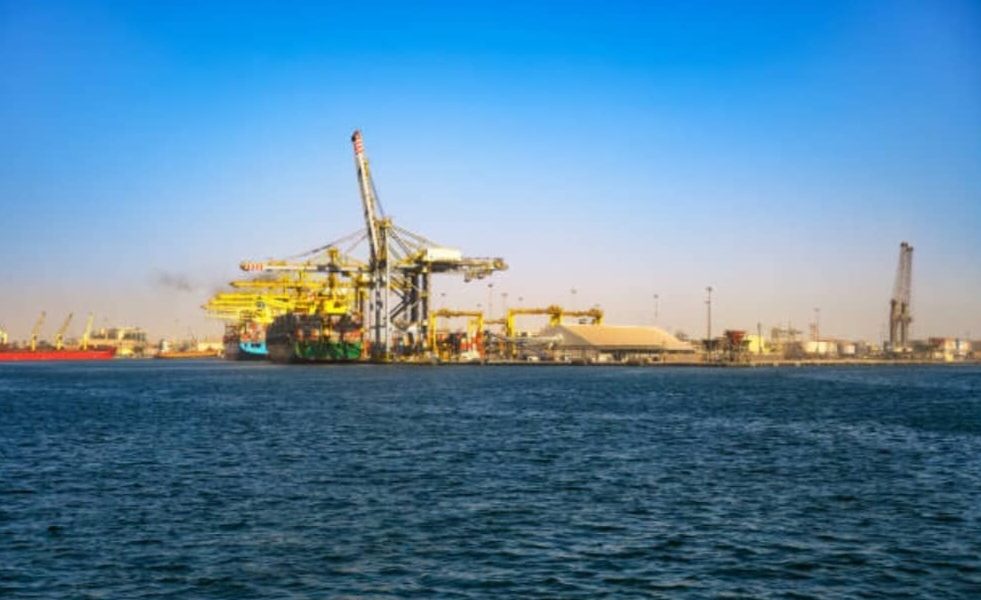

The excitement surrounding the proposed Sanyang deep-sea port is easy to understand. A modern port stirs dreams of cranes on the skyline, ships on the horizon, and prosperity at the gates. It is being sold as a ladder to economic independence. But ports do not thrive on concrete alone. They thrive on corridors, and corridors, in our sub-region, are governed by geography and cold economic logic, not patriotic slogans.
The Gambia is a river enclave wrapped inside Senegal. Any serious attempt to turn our country into a regional re-export hub must pass through Senegalese territory. This is not ideology but a definitive map.
Since the collapse of the Senegambia Confederation in 1989, Senegal has quietly but firmly enforced one rule. That the Gambia’s low-tariff imports must not undercut Senegalese trade inland. That rule has outlived presidents, parties, and diplomatic moods.
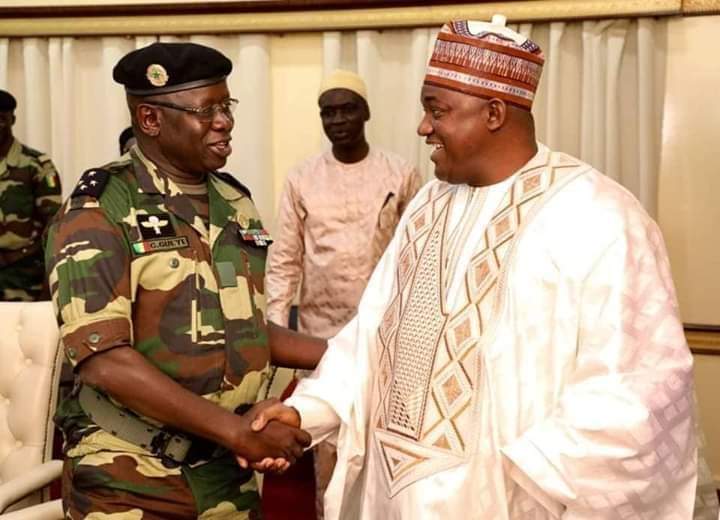
There was never a time in recent history when relations between our two leaders were warmer than during the joint tenure of former President Macky Sall and and President Adama Barrow between 2017 and 2024. Their friendship was visible and sincere. Yet even in this season of goodwill, Senegal’s economic posture toward Gambian transit trade did not soften by a millimeter.
The same stance existed under Abdou Diouf. It survived the era of Sir Dawda Jawara and persisted through the long and confrontational reign of Professor Yahya Jammeh. This tells us something important about it. That it is not about personalities but about policy carved in stone.
Senegal’s reasoning is brutally simple. If cheap goods imported into The Gambia are allowed to stream freely into to Mali, Gunea Bissau and the markets of Casamance, like before, the result would be predictable: Senegalese customs revenue would shrink, traders would suffer, and the dominance of the Port of Dakar and the rising Port of Ndayane would be weakened.
No state voluntarily engineers its own economic hem·or·rhage. This is not hostility but rather, self-preservation.
Some Gambians wave the banner of regional integration and accuse Senegal of breaking the rules. In theory, the African Union and ECOWAS promise free movement of goods and people. In practice, those promises bend when they collide with hard national interests. Free movement mostly means people and small-scale trade, not massive tariff arbitrage that drains a neighbor’s treasury.
This is why shouting “injustice” achieves little. Senegal controls the roads. Senegal controls the corridors. Senegal holds the leverage. A Gambian mega-port, no matter how deep its waters or tall its cranes, cannot become a regional hub without Senegal’s consent.
And here is where our national debate must grow up.
If we treat Sanyang as a weapon in a competition with Senegal, we are building a monument for disappointment. But if we strip away our nationalistic dogma and embrace a practical, economically viable SeneGambia spirit, Sanyang can become a bridge instead of a battleground.
A sensible deal would not be romantic but technical:
That would require but not limited to joint customs posts, harmonized tariffs, shared revenue formulas, Senegal guaranteeing transit, and The Gambia guaranteeing no dumping.
Such an arrangement would calm Senegal’s fears, give The Gambia relevance, and lower logistics costs for our neighbors. It would turn rivalry into interdependence.
This would be more of a strategy that a surrender.
History has unambiguously illustrated that Jawara could not break Senegal’s logic, Jammeh could not battle them into abandoning it, and a deep-sea port alone will not dissolve it either.
Geography is stubborn and corridors are unforgiving. Maps do not listen to speeches or succumb to sentiments.
The Sanyang project can still succeed, but only if we abandon the illusion that concrete can defeat structure. Our future lies not in trying to outbuild Senegal, but in learning how to out-negotiate our constraints.
Where many chase moral victory, we must pursue economic survival.