
Gambia’s main opposition United Democratic Party (UDP) has withdrawn from ongoing negotiations aimed at forming a coalition to challenge the ruling National People’s Party (NPP) in the country’s December 2026 presidential election.
The decision was announced on Saturday during the latest round of coalition discussions, according to sources familiar with the talks.
UDP representatives at the negotiations, Lare Sisay and Lamin Manneh, reportedly informed participants that the party’s position was no longer aligned with that of the other parties involved in the discussions.
Mr Manneh was quoted as saying that the decision to withdraw had come from the leadership of the UDP.
The party’s exit follows an apparent deadlock over the process for selecting the coalition’s presidential candidate.
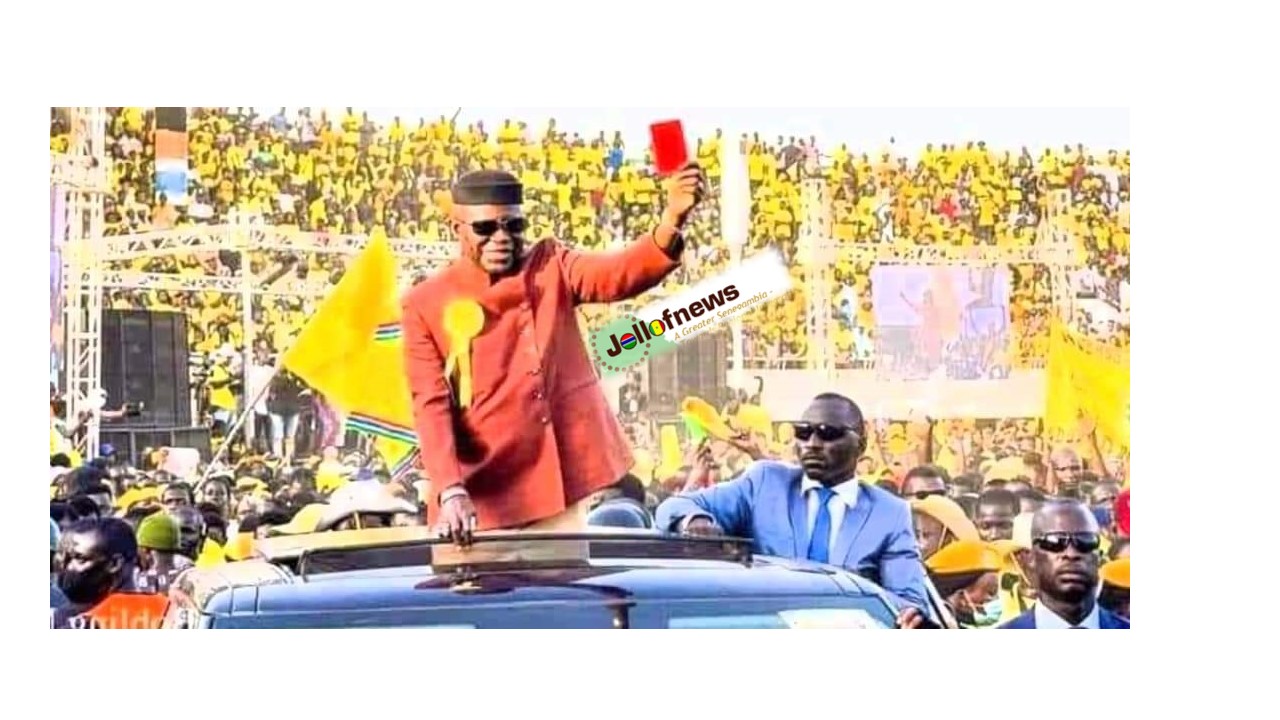
The UDP, which is widely regarded as the Gambia’s largest opposition party, has maintained that it should provide the candidate to lead the coalition against President Adama Barrow in the December 2026 election.
The party is led by veteran lawyer and former vice president Ousainou Darboe.
However, other opposition parties participating in the negotiations have reportedly rejected the idea of automatically handing the coalition candidacy to the UDP. They have instead insisted that the candidate should emerge through a democratic process involving all parties and members of the proposed coalition.
The disagreement over the selection of a standard-bearer appears to have become a major obstacle in efforts to unite the opposition ahead of the presidential election.
The Gambia is scheduled to hold presidential elections on 5 December 2026, with President Adama Barrow seeking a third term in office a prospect that remains politically controversial among sections of the opposition.
President Barrow, 61, has won two presidential elections. He first came to power in 2016 as the candidate of an opposition coalition that defeated former President Yahya Jammeh, who had ruled the country for 22 years.
Although Mr Jammeh initially accepted the election result, he later rejected the outcome, citing an error by the electoral commission. The dispute triggered a month-long political crisis that eventually led to regional and international pressure for him to step down.
Mr Jammeh ultimately left the Gambia and went into exile in Equatorial Guinea.
With the 2026 election approaching, efforts to form a united opposition front have taken on renewed importance. However, the UDP’s withdrawal from the coalition talks raises fresh questions about whether the opposition parties can overcome their differences and agree on a common candidate to challenge President Barrow.