
Fresh discussions between Ghana and The Gambia over accountability for the 2005 killing of West African migrants have brought renewed attention to one of the darkest episodes of former Gambian President Yahya Jammeh’s rule.
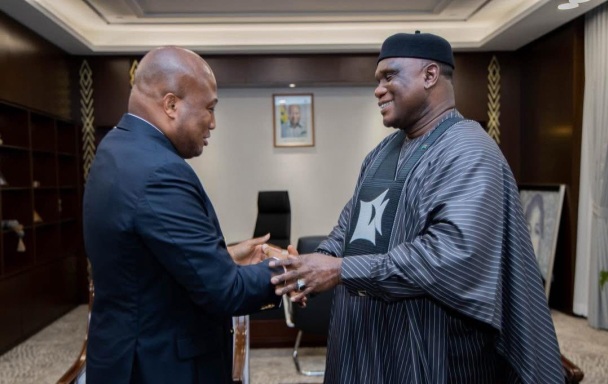
Ghana’s Foreign Affairs Minister, Samuel Okudzeto Ablakwa, disclosed on Sunday that he held bilateral talks with Gambian Foreign Minister Sering Modou Njie, with the issue of justice for the victims featuring prominently in the discussions.
According to Ablakwa, the talks also covered cooperation in education, health, defence and support for The Gambia’s foreign policy training initiatives. However, the question of accountability for the killing of more than 50 migrants, many of them Ghanaians, remained a central issue.
The migrants were arrested in July 2005 after their boat arrived in The Gambia while they were attempting to travel to Europe. At the time, Jammeh’s government accused the group of being linked to a plot to overthrow the regime.
In the days that followed, nearly all of the migrants were executed. Victims included about 44 Ghanaians, along with Nigerians, Togolese, Senegalese and Ivorians. Some were reportedly killed inside The Gambia, while others were transported across the border into Senegal where they were shot and dumped in wells.
Years later, former members of Jammeh’s feared paramilitary unit, known as the “Junglers”, testified before The Gambia’s Truth, Reconciliation and Reparations Commission (TRRC) that the killings were carried out on Jammeh’s direct orders.
One witness, Omar Jallow, told the commission that commanders overseeing the operation informed members of the unit that the former president had instructed them to eliminate all the migrants.
The TRRC later concluded that the killings were part of a state-backed operation involving elements of the country’s intelligence, military and police services. The commission also found evidence of a coordinated cover-up aimed at concealing the crimes.
Earlier attempts by Ghanaian investigators to probe the killings in 2005 and 2006 reportedly faced obstruction from Jammeh’s government.
A separate joint investigation conducted by the United Nations and ECOWAS in 2009 attributed the deaths to rogue security officers. However, later testimonies before the TRRC and independent investigations challenged that conclusion and pointed to direct state involvement.
In November 2021, the TRRC submitted its final report to President Adama Barrow, detailing widespread abuses committed during Jammeh’s 22-year rule. The report contained hundreds of findings and recommendations, including calls for prosecutions and reparations for victims and their families.
The Gambian government later accepted recommendations to compensate families affected by the migrant killings. In May 2022, authorities approved about $600,000 in compensation to be distributed through the governments of the victims’ home countries.
Despite that commitment, families and survivor groups have continued to complain that compensation has not reached them and that there has been little communication from authorities regarding the process. Human rights organisations have also argued that the approved amount falls far short of the scale of the atrocities committed.
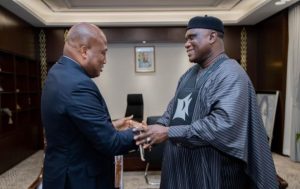
The renewed diplomatic engagement between Accra and Banjul is expected to increase pressure for implementation of the TRRC recommendations, including justice for victims of the migrant massacre.
During the talks, Gambian Foreign Minister Sering Modou Njie also expressed appreciation for the role played by Ghanaian troops in supporting stability in The Gambia during the political transition that ended Jammeh’s rule and ushered President Adama Barrow into office.