
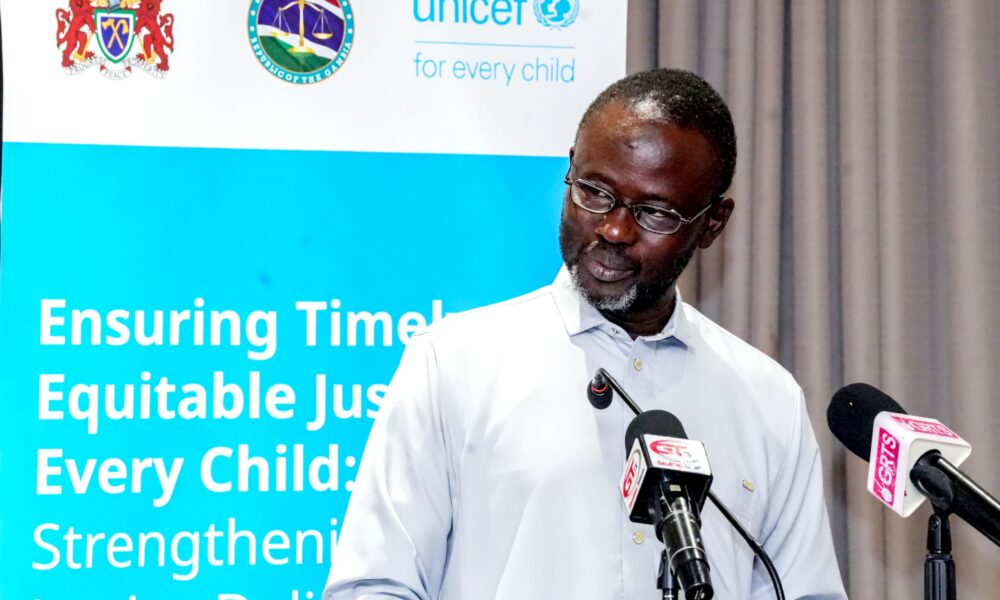



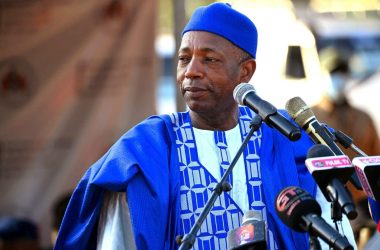
The Permanent Secretary at the Ministry of Gender, Children and Social Welfare, Ambassador Habbib T. B. Jarra, has called for an urgent transformation of The Gambia’s child justice system from a punitive model to one that is restorative, child-centred, and fully aligned with international standards.
Speaking at the High-Level Multi-Stakeholder Dialogue on the Child Justice System held on Tuesday at the Sir Dawda Kairaba Jawara International Conference Centre in Bijilo, Ambassador Jarra said that while The Gambia has made significant progress in strengthening child protection laws and policies, implementation continues to lag behind.
He warned that legal reforms alone are insufficient if children in conflict with the law continue to face unsafe detention conditions and limited access to justice.
“We continue to face a shortage of dedicated, child-friendly detention and rehabilitation facilities. In some instances, children are still held in environments that are neither appropriate nor safe, exposing them to further harm and undermining their dignity,” Ambassador Jarra said.
The Permanent Secretary acknowledged the government’s efforts under President Adama Barrow’s administration to strengthen the country’s child protection framework, including establishing the legal basis for a specialised juvenile justice system. However, he noted that many of the intended reforms have yet to translate into meaningful improvements for children interacting with the justice system.
Jarra expressed concern over the persistent lack of child-friendly detention and rehabilitation facilities, describing the situation as a major obstacle to safeguarding children’s rights. He also highlighted the widespread gap in access to legal representation, noting that many children from vulnerable families still navigate the justice system without adequate legal support despite constitutional and legal guarantees.
According to him, these shortcomings fall short of Gambia’s obligations under regional and international human rights instruments, including the African Charter on the Rights and Welfare of the Child, which requires children deprived of their liberty to be protected and kept separate from adult detainees.
To bridge the gap between policy and practice, Ambassador Jarra outlined a five-point reform agenda aimed at strengthening the country’s child justice system.
He called for stronger diversion mechanisms that would empower law enforcement officers to use alternatives to arrest and detention wherever appropriate, stressing that detention should only be used as a measure of last resort.
The Permanent Secretary also urged increased investment in dedicated rehabilitation centres that provide education, psychosocial support, and vocational skills training to help children successfully reintegrate into society.
On access to justice, Jarra emphasised the need to expand legal aid services to ensure that no child appears before the courts without proper legal representation.
He further advocated stronger collaboration among social workers, police officers, prosecutors, judges, and other child protection actors to create a coordinated and child-sensitive justice process.
Finally, he called for sustained capacity building across all institutions involved in child justice, saying professionals must be equipped with the knowledge and skills needed to uphold the best interests of every child at every stage of the justice process.
The high-level dialogue brought together government officials, justice sector institutions, development partners, and child protection stakeholders to assess the state of The Gambia’s child justice system and identify practical reforms aimed at ensuring children are treated with dignity, protected from harm, and given opportunities for rehabilitation rather than punishment.