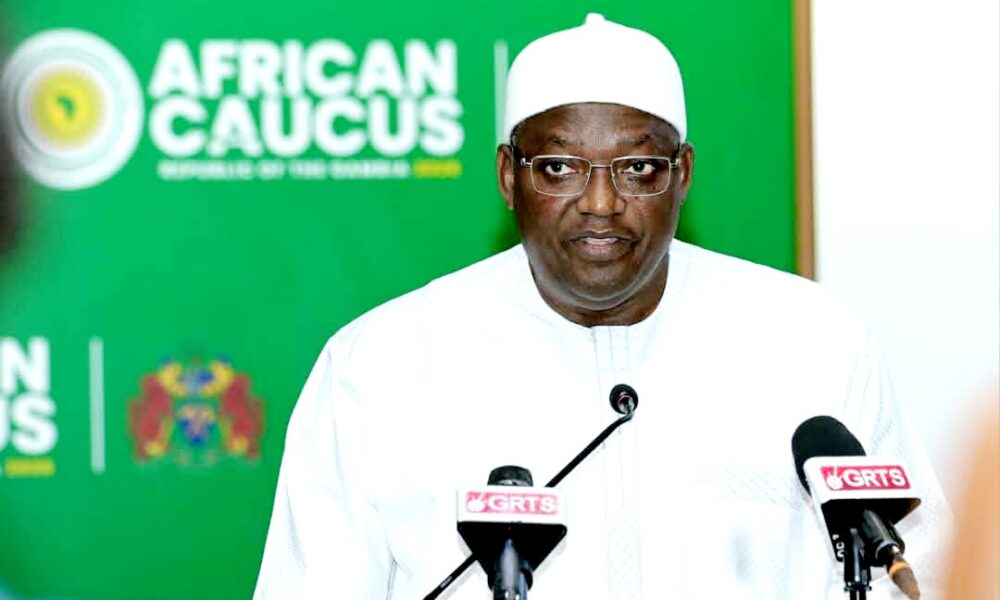

President Adama Barrow has called for a fundamental rethink of how Africa finances its development, arguing that strategic financing is essential to unlocking the continent’s vast economic potential and accelerating sustainable growth.
Addressing delegates at the 2026 African Caucus Meeting held on Monday at the OIC Conference Centre in Bijilo, President Barrow said Africa possesses abundant natural resources and a rapidly growing youthful population but continues to face significant obstacles, including climate-related vulnerabilities and widening development financing gaps.
The Gambian leader stressed that overcoming these challenges requires bold financial reforms, stronger domestic resource mobilisation, and greater collaboration among African governments and international development partners.
“Africa’s wealth must be matched by financing strategies that promote sustainable development and structural transformation,” President Barrow said, emphasising that the continent can no longer rely solely on external assistance to achieve its development ambitions.
Highlighting Gambia’s national development agenda, President Barrow pointed to his government’s ongoing nine-year investment programme aimed at building a more resilient and diversified economy.
He said the strategy focuses on expanding critical infrastructure to facilitate trade, improve regional connectivity and strengthen economic independence. The programme also prioritises investments in healthcare to build a healthier and more productive workforce, alongside reforms in education and skills development to prepare young people for emerging opportunities in the global economy.
“We must prepare our youth today for the jobs of tomorrow,” the President said, describing Africa’s growing youth population as one of its greatest assets if supported through sustained investment in human capital.
President Barrow noted that Africa’s demographic dividend can only be realised through long-term commitments to education, innovation and workforce development.
Recognising that foreign aid alone cannot close the continent’s financing gap, the President urged African countries to strengthen economic self-reliance through improved domestic revenue generation and enhanced financial governance.
He outlined a three-pronged approach centred on expanding domestic resource mobilisation, accelerating the digital transformation of tax administrations to improve efficiency and transparency, and strengthening international cooperation to curb illicit financial flows that continue to drain billions of dollars from African economies each year.
According to President Barrow, modernising tax systems and tackling corruption will increase public revenues while creating greater confidence among investors and development partners.
He also called for stronger global partnerships to address the legal and illegal outflow of financial resources from Africa, describing the issue as a major barrier to inclusive economic growth.
The 2026 African Caucus Meeting brought together finance ministers, central bank governors and senior policymakers from across the continent to discuss shared economic challenges and strategies for sustainable development.
As the meeting draws to a close, participants have echoed President Barrow’s call for innovative financing frameworks capable of transforming Africa’s immense natural and human resources into lasting prosperity.
The discussions are expected to inform Africa’s engagement with international financial institutions and shape future policies aimed at strengthening economic resilience, promoting inclusive growth and delivering sustainable development across the continent.