



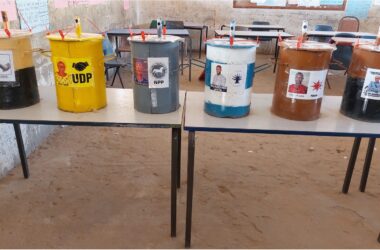

Public confidence in the electoral system depends on transparency, accountability and the consistent application of electoral laws free from political influence or overreach. Safeguarding and maintaining the integrity of the voters’ register is a statutory responsibility of the Independent Electoral Commission (IEC) and underpin credible elections and democratic governance and public order.
In my mind’s eye, questions remain about whether the IEC has applied the law fairly and consistently. For example, reports show that national identity documents have been issued to some Gambians residing in some African countries while comparable opportunities have not been extended to similarly situated Gambians- e.g., in Europe, and America. The legal basis for the Executive or the IEC’s decision to differentially treat similarly situated Gambians is yet to be clearly explained to the public; such decisions must be open to independent scrutiny by stakeholders, legal challenge and the full implementation of lasting reforms where necessary. From my perspective, the expressed concerns should be viewed in light of the Supreme Court’s decision in the civil suit filed by Bakary B. Dabo et al., against the Attorney General and the IEC, which affirmed that voting is a constitutional right equally bestowed upon Gambians at home and abroad. Yet, the IEC’s administrative practices have not given any practical effect to that constitutional right; this needs a remedy.
Allegations over the issuance of voter’s cards to individuals of questionable Gambian nationality have marked the recent supplementary voter registration process. There should be no quarrels as to who gets to register and vote in the Gambia’s elections- the reader can refer to https://standard.gm/who-gets-on-the-voter-roll/. More recently, social media posts and IEC’s own admission have intensified legitimate public concerns about missing, misspelt and omitted names in the provisional voters’ register- https://www.facebook.com/share/v/1A2Evt65dr/?mibextid=wwXIfr and https://standard.gm/iec-clarifies-omissions-in-provisional-voter-list3/, respectively. If these irregularities are not promptly, impartially and transparently investigated by the IEC, public confidence in the work of the IEC will be justifiably undermined with serious consequences: disputes, disenfranchisement of eligible voters, legal challenges, legitimacy of elections, public disorder and so on.
Social media posts on the missing/omitted names in the provisional voters’ register are urging voters to inspect the registers and report any missing names or inaccurate information. With relatively low literacy levels/limited access to information/limited turnaround time, the rainy season having just begun and some citizens engaged in farming activities, and transport and communication costs remaining high, it is unreasonable for the IEC to rely on voters to identify and seek to correct administrative errors.
Political parties, particularly opposition parties, would benefit by seeking to work together to assist the voters in checking the register and submitting the correct information or objections through clear processes; but the IEC must ensure that all political parties have equal access to the processes. However, it must also be stressed that while public inspection of the registers is an internationally recognised safeguard because individuals- armed with the skills- are often best placed to identify errors that relate to their data, I believe the efforts of individuals and political parties should complement, not replace, the statutory responsibility of the IEC. Eligible voters must not bear unreasonable financial, logistical or practical burdens to rectify the IEC’s errors which they must fix immediately.
The IEC should correct errors promptly and transparently by using its available resources: increase capacity where necessary, deploy mobile verification teams to local verification centres, establish multiple reporting channels, and conduct active, transparent, and accessible correction campaigns that are equally available to all communities and parties. Accessible and timely correction mechanisms are essential to ensure that eligible voters are not disenfranchised. Prompt corrections will reduce disputes and potential litigations while strengthening the integrity, credibility, and legitimacy of our electoral process. The measure will also help minimise avoidable legal challenges, an area the Barrow government has experienced embarrassing setbacks in several high-profile cases.
The IEC has a fundamental statutory duty to maintain an accurate, impartial and credible voters’ register. Therefore, the IEC should urgently work with stakeholders and reconcile the register, publish corrected lists and clearly explain the causes of the errors and assure the public that such errors will not be repeated. However, given the concerns raised about the IEC’s actions in recent years, some may be forgiven for taking the view that these as deliberate acts rather than mere administrative errors. Therefore, the IEC must quickly demonstrate- through transparent, independent and accountable actions- that it can be trusted to safeguard the integrity of the electoral process. The IEC must cultivate, strengthen and sustain public confidence in its works, by ensuring that its actions and decisions are guided by the law/subject to legal review, transparent, evidence-based, with the outcomes of all works clearly articulated and open to independent audits/public scrutiny. These measures are essential because the IEC has a statutory duty to uphold: it must safeguard the integrity, credibility and legitimacy of our elections in an honest and transparent manner.