
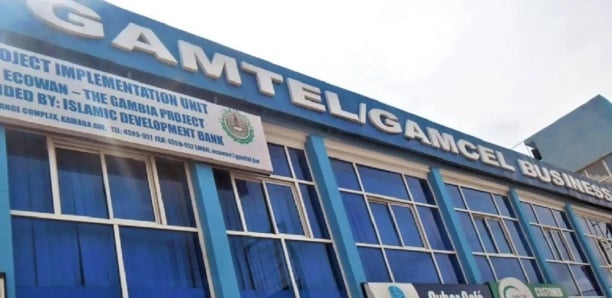




The government of the Gambia has taken a major step towards the privatisation of state-owned mobile operator Gamcel after its parent company, Gamtel, signed an agreement that will see private telecommunications operator YCELL acquire an 80% stake in the struggling mobile network.
The agreement marks one of the most significant developments in Gambia’s telecommunications sector in years, with YCELL expected to inject approximately US$83 million into the business to modernise Gamcel’s ageing infrastructure and restore its competitiveness.
If implemented as planned, the investment programme will transform virtually every aspect of Gamcel’s operations. The project includes the nationwide rollout of 4G/LTE and 5G radio access networks, the modernisation of the operator’s core network, and the deployment of next-generation operational and business support systems (OSS/BSS), customer relationship management (CRM) platforms, and converged billing systems.
Beyond network upgrades, the agreement also envisages the construction of a new headquarters for Gamcel, the installation of hybrid power solutions at telecommunications sites to improve reliability and reduce operating costs, and the deployment of integrated revenue assurance and fraud management systems. Staff training, capacity-building programmes, and a comprehensive rebranding and marketing campaign also form part of the proposed transformation.
The investment comes at a critical time for Gamcel and its parent company, Gamtel, both of which have struggled for years with ageing infrastructure, operational inefficiencies and declining market share.
An audit published by Gambia’s National Audit Office in April 2024 painted a troubling picture of the state-owned telecommunications company. The report concluded that Gamtel had failed to keep pace with increasing demand for fibre-optic services across several parts of the country because of inadequate network infrastructure and limited connectivity equipment.
The audit also highlighted persistent quality-of-service challenges, weaknesses in the company’s administrative systems and the absence of key operational procedures. In addition, Gamtel has faced significant difficulties recovering outstanding payments from government institutions, private businesses and individual customers, further weakening its financial position.
YCELL will therefore inherit not only an ageing network but also substantial operational and financial challenges. Reversing Gamcel’s decline will require rebuilding customer confidence while competing against well-established rivals in an increasingly competitive market.
Gamcel currently ranks either third or fourth in Gambia’s mobile telecommunications market, where Africell and QCell dominate with an estimated combined market share of around 90%, although comprehensive and up-to-date industry statistics remain scarce.
The new owners will also face the challenge of stemming subscriber losses, as many customers have migrated to competing networks offering broader coverage and more reliable services.
Despite the ambitious plans, questions remain over whether the transaction and the promised investments will be fully realised.
According to the Ecofin news agency, uncertainty persists over the implementation of the deal, given the longstanding structural and financial problems that have affected both Gamcel and Gamtel. Successfully executing such a large-scale modernisation programme will require sustained investment, effective management and regulatory support.
Nevertheless, the signing of the agreement represents an important milestone in the government’s efforts to revitalise the country’s telecommunications sector. Should the investment materialise as proposed, it could significantly improve network quality, expand broadband access and strengthen digital connectivity across The Gambia.
For consumers and businesses alike, the success of the privatisation will ultimately be judged not by the scale of the promised investment, but by whether it delivers faster, more reliable and more affordable telecommunications services in the years ahead.