




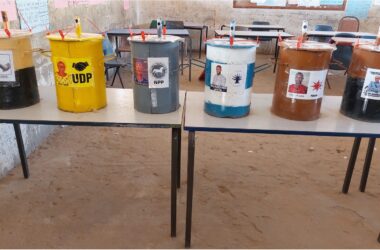
There is considerable truth in the saying that elections are won or lost long before polling day. This observation reflects the importance of maintaining the integrity of every stage of the electoral process, particularly voter registration. An accurate voter register is at the heart of credible elections, and the IEC has a statutory duty to ensure that every eligible voter is properly registered and that the register remains complete and accurate.
Safeguarding the integrity of the electoral process requires that the IEC acts transparently and is accountable and that the public has confidence in its work. Unfortunately, public confidence in the IEC has been weakened by the discovery of omissions and incomplete information in the supplementary voter register. This raises serious questions about whether the IEC can uphold its statutory duty: maintain an accurate, impartial and credible voters’ register and to honestly administer the upcoming elections impartially, transparently, and in accordance with the law. With about four months remaining before the elections, the IEC and all relevant stakeholders must devote considerable attention to identifying and correcting inaccuracies in the provisional voters’ register and ensuring that the final register published and subjected to thorough public scrutiny so that it is accurate, complete, and credible.
Adequate time for public scrutiny, not mere scrutiny, is an essential safeguard in any credible electoral process. International electoral standards recognise that voters and stakeholders should have ample opportunity to examine the register and request corrections before polling day. However, the limited period (27 July 2026) provided for the inspection of the supplementary voter register is concerning.
The circulation of multiple unofficial lists alleging to identify omitted voters seems to further complicated matters. While public participation in scrutinising the register is important, the dissemination of unverified information creates confusion and further undermines confidence in the electoral process. Political parties, civil society organisations, the media and individuals all have a responsibility to ensure that the information shared is accurate, verified and is responsibly communicated.
Electoral integrity extends beyond correcting omitted or missing information; it requires confidence that the register contains only those who are legally entitled to vote. However, a legitimate question arises as to what safeguards the IEC applied, given that National Identity Cards were issued before the supplementary registration exercise, particularly in border communities or to persons with possible ties to neighbouring countries or political interests. At the same time, comparable opportunities were not extended to Gambian citizens residing in the United States, Europe, and other parts of the diaspora. Still, I think the public is entitled to know what verification processes were followed and how many recipients of the National Identity Cards may have been subsequently registered to voters in our elections.
While public attention has rightly focused on omitted names and missing data, it is also appropriate that the complete voters’ register be published for public scrutiny. Given the omissions and missing information identified in the supplementary voters’ register, I believe such transparency is necessary to restore public confidence in the IEC. The IEC must ensure that the complete voter register is demonstrably accurate, complete and lawful. In this regard attention must be devoted to ensuring that the register contains no duplicate registrations, deceased persons or other ineligible voters. Public trust depends not simply on the outcome of an election but on confidence that the entire process is transparent, accountable and fair and that every eligible citizen can vote, and that no ineligible person can do so.
These expectations are not unique to The Gambia. They reflect internationally recognised electoral standards: The Venice Commission’s Code of Good Practice in Electoral Matters emphasises accurate voter registers, transparency and public scrutiny to avoid disputes. The African Union’s African Charter on Democracy, Elections and Governance, International IDEA’s International Electoral Standards, ECOWAS’ Protocol on Democracy and Good Governance, and the United Nations’ International Covenant on Civil and Political Rights (Article 25) together with General Comment No. 25 (-which provides the authoritative interpretation of Article 25) all recognise that accurate voter registers, transparent verification procedures, opportunities to correct errors and independent oversight are essential ingredients of free, fair and credible elections. These safeguards provide broader protection against unlawful or abusive interference with the voting process, ensuring that individuals have the opportunity to participate in public affairs, either directly or through freely chosen representatives.