

Minister of Lands, Regional Government and Religious Affairs Hamat N.K. Bah has outlined a series of legal, institutional and operational reforms aimed at strengthening land administration and addressing longstanding challenges in the management of land in The Gambia.
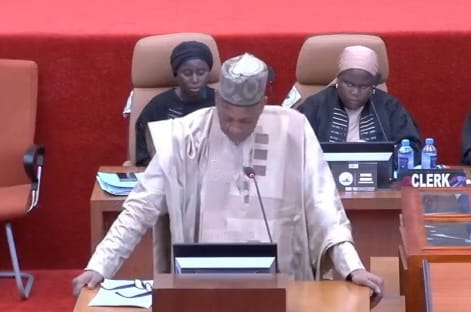
Speaking during the Third and Fourth Ordinary Sessions of the 2026 Legislative Year, Minister Bah responded to findings and questions from lawmakers, detailing measures his ministry is pursuing to improve oversight, decentralise land services, modernise administration and tackle speculative land holding.
A central component of the proposed reforms is the restoration of the Land Allocation Board, which the minister said would provide greater oversight over land allocation decisions.
Minister Bah said his review of existing laws revealed what he considered a significant gap in institutional accountability, particularly given the importance and value of land to the country.
“When I came to the ministry, having looked at all the laws, I realized that the most powerful minister in custody with our biggest wealth has nothing to control over him. There’s no oversight body that controlled this minister,” Bah told lawmakers.
He added that no individual should have unchecked authority over such a critical national resource.
“Nobody should be super in this country, particularly this important element of our country that has faced so much of abuses since independence,” he said.
The proposed legislative amendments, which the minister said are nearing completion, would reinstate the Land Allocation Board and give it a role in scrutinising and monitoring land allocation procedures, including eligibility requirements and the timing of allocations.
Regional Land Offices
The government is also moving to decentralise land administration by establishing and expanding regional land offices.
According to Minister Bah, new offices are being constructed in locations including Wassu in the Central River Region North and Basse in the Upper River Region.
The initiative is intended to make land-related services more accessible to residents outside the Greater Banjul Area, allowing citizens to obtain leases and other documentation closer to where they live rather than travelling to Banjul.
The minister said the decentralisation of services forms part of broader efforts to improve efficiency and reduce the administrative burden on citizens seeking land services.
Government Targets Speculative Land Holding
Minister Bah also highlighted the need for stronger measures to address the speculative acquisition and holding of undeveloped land.
He noted that The Gambia is among the most densely populated countries on mainland Africa, making effective management and utilisation of available land increasingly important.
The Ministry of Lands is therefore proposing amendments to the State Lands Act and related land policies to address what the government considers loopholes that can facilitate land hoarding.
Under the current statutory framework, the minister explained, placing a perimeter fence around an undeveloped plot can qualify as “development.” This can make it difficult for the state to impose taxes or other measures on land that remains unused.
The proposed amendments would seek to redefine what constitutes meaningful development of land, potentially allowing the government to take action against speculative land holding and encourage property owners to put allocated land to productive use.
The reforms outlined by Minister Bah represent a broader attempt by the government to strengthen accountability in land administration while making land services more accessible and improving the utilisation of one of the country’s most important and contested resources.
The proposed legal changes will now be subject to the legislative process before they can take effect.