



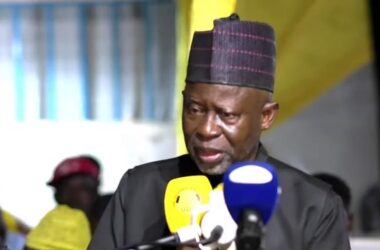

President Adama Barrow has highlighted his government’s social protection initiatives, saying his administration is the first in The Gambia’s history to provide dedicated monthly financial assistance to caregivers and persons with disabilities.
President Barrow made the remarks on Sunday during the official presentation of nine new double-cabin pickup vehicles to regional executives and youth wing leaders of the ruling National People’s Party (NPP).
Addressing supporters at the event, the president outlined several social welfare measures introduced under his administration, including regular financial support for caregivers and elderly citizens.
According to President Barrow, more than 3,000 caregivers currently receive monthly stipends from the government. He said the programme has a wider impact, benefiting more than 35,000 Gambians when members of the recipients’ immediate households are taken into account.
Barrow said the financial assistance is intended to ease the economic burden faced by families caring for vulnerable members and to help meet their day-to-day needs.
The president also pointed to legislative measures adopted by his administration to formally recognise and strengthen protections for caregivers and persons with disabilities. He described the initiatives as part of a broader effort to institutionalise social protection and improve support for vulnerable groups.
“These programmes are a historic milestone,” President Barrow said, while reaffirming his government’s commitment to expanding social welfare interventions.
He pledged that additional support and relief measures would be introduced in the coming months as his administration continues to implement its social protection agenda.
The president’s remarks come amid growing calls for stronger social safety nets and greater inclusion of persons with disabilities in national development programmes.
The government has increasingly presented social protection as a key component of its development agenda, with assistance programmes targeting vulnerable households, older citizens and caregivers across the country.
President Barrow said his administration would continue working to expand such interventions, arguing that supporting vulnerable citizens remains an important responsibility of government.