
A state has a fundamental responsibility of safeguarding sovereignty, maintaining peace and stability, and protecting its citizens. By these measures, I believe I have good grounds to judge the Barrow administration’s record a failure. On 16 July 2026, Senegalese security forces, presumably acting under the authority of Commander-in-Chief, Bassirou Diomaye Faye, demolished a structure and asserted control over disputed border territory in the Bulock area of Foni, West Coastal Region. Assuming the border is indeed disputed, the demolition of the structure seems to be an undiplomatic means of addressing such a sensitive matter with our closest neighbour. More strikingly, reports that the operation was carried out without prior consultation with the Barrow government raise questions about how the Senegalese authorities view Barrow’s administration and its ability to exercise effective authority over The Gambia’s territorial sovereignty.
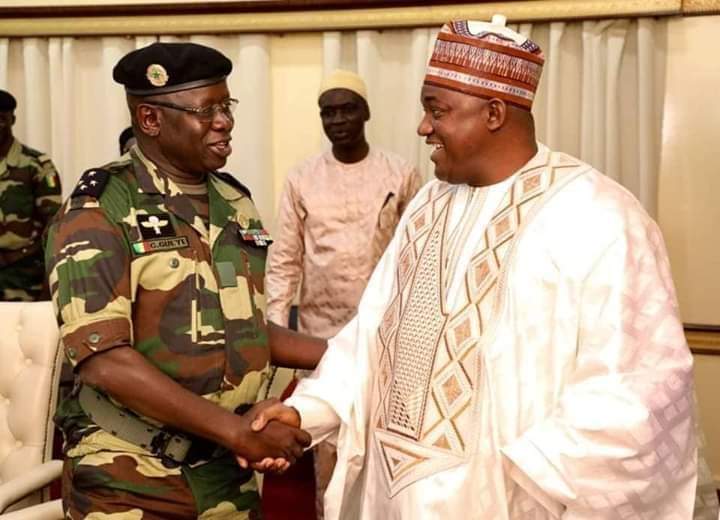
The unfortunate tension with our closest neighbour has raised important questions about the apparent tilted bilateral security relationship and the implications of The Gambia’s widely discussed continued reliance on another state’s security forces for the protection of the presidency. Here, it is worth stressing the point that this arrangement, in my view, appears to have come at the expense of Gambians whose security, has deteriorated under the Barrow administration.
I think the border tension has reignited the debate over the continued presence and role of the Senegalese security personnel in The Gambia. If border demarcation(s) had indeed been completed but it did not prevent this tension, it may lend the matter some added layers of legitimate concerns, questions and complexity. This is particularly significant given that The Gambia is almost entirely encircled by Senegal, except for the Atlantic Coast [- which resembles a smile, giving rise to its well-known label- “The Smiling Coast of Africa”]. However, if border demarcation remains incomplete, a position Senegal maintains, this tension gives impetus to the need to urgently seek to resolve the boundary dispute through a mutually accepted process. A definitive settlement would help remove the potential for recurring disputes and would contribute to a more peaceful and stable relations between very close and intertwined neighbours.
When the protection of a state is entrusted to an unskilled and ineffective leadership team that is more concerned with preserving its hold on power than fulfilling its responsibilities, the country is left exposed and vulnerable. While some senior government officials and military commanders have praised the Gambian Armed Forces for exercising restraint, I hold the view that when a provocation goes unanswered, it has the tendency to invite further incidents. Given what could be suitably described as The Gambia’s location within Senegal, it is conceivable that similar tensions could occur in other border communities if the underlying issues remain unresolved. However, it remains unclear whether the Barrow government which appears ill-equipped and indifferent to the country’s pressing challenges, has the requisite skills to effectively resolve a matter of this nature.
Please allow me to briefly take you on this journey: I think the events in Ukraine may help to illustrate one of the points I made above. Readers may recall that in February and March 2014, Vladimir Putin’s forces seized control of Crimea, resulting in its annexation following a referendum, which Ukraine and most of the international community regarded as illegal. Although following the seizure and annexation of Crimea, Western countries condemned and imposed sanctions- which did not bite enough- on Putin’s Russia, they did not provide the level of military assistance that Ukraine would subsequently receive following its full-scale invasion by Russia in February 2022. One wonders if the limited response to the seizure and annexation of Crimea may have contributed to Putin’s belief that a further military adventure in Ukraine would yield the same outcomes: winnable and manageable. Although the reasons behind Russia’s 2022 full-scale invasion of Ukraine may be complex, some may argue that the limited international response to it seizure and annexation of Crimea in 2014 may have emboldened Putin, signalling to him that the costs of further military adventure in Ukraine would be worthwhile.
The border tension in Bulock underscores a strong need for comprehensive security sector reform. In my view, the level of public resources devoted to the security forces, including the military is not matched by their contribution to national security and the protection of The Gambia and the people of The Gambia. Quite often, elements of the security services have been associated with actions against the very citizens they are meant to protect, including intimidating, unlawful arrests and detentions, and using disproportionate force, and tear gas against largely peaceful protesters. At the same time, they have remained largely unprofessional and ineffective at addressing petty and violent crime, while also demonstrating little meaningful investigative capacity. Given the hardship they have often inflicted on the very citizens they are meant to protect, often through their lack of presence or absence, one must wonder whether they represent good value for taxpayers’ money. Nearly a decade after the departure of Yahya Jammeh, strengthening the professionalism, capacity, and independence of our security institutions remains neglected. Yet, they are central to our sense of safety, security, reinforcing national sovereignty and reducing dependence on external security arrangements, with all its attendant shortcomings- the current border tension being one of them.
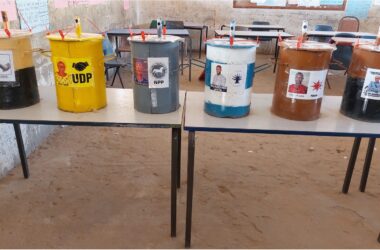
It is my hope that the border tensions will help focus minds and shape the domestic political debate ahead of the December 2026 presidential election. In my view, this border tension underscores the need for a new kind of leadership team that is more serious, competent, and capable of addressing the concerns of citizen effectively, particularly on matters of national security, governance, national sovereignty, and tackling rampant corruption, while also demonstrating the capacity to manage our bilateral relations with seriousness, mutual respect, and restraint on both sides. Ultimately, any decision on political leadership rests with Gambian voters through a democratic electoral process. So, it is to be hoped that the IEC, as the referee of that important process, will discharge its statutory responsibilities by ensuring that the December 2026 presidential election is transparent, free, fair, and credible. However, I think public confidence in the IEC’s ability to do so may have been undermined by its shortcomings, identified in the supplementary voter register, on the important matter of the omissions of voter information. Given that errors exist in the supplementary register- from a much smaller exercise-, I believe there is a strong case for publishing the complete voters’ register for public scrutiny, so that any inaccuracies can be identified and corrected before polling day.
Now, whether the two administrations can effectively pursue, on the basis of mutual respect and trust, the diplomatic and peaceful avenues available to resolve the border tension following the demolition of the Bulock military border post by Senegalese army remains to be seen. Clearly, there is need for calm and restraint on both sides while pursuing established mechanisms such as direct bilateral engagement with Senegal (-seemingly tilted in favour of Senegal as they protect Barrow), the activation of joint border and security mechanisms, reaching out to regional organisations such as ECOWAS and the African Union. If necessary, broader international engagement, including with the United Nations and bilateral partners, may help support dialogue, trust/confidence-building, and border demarcation efforts, leading to a peaceful resolution consistent with international law and respect for the sovereignty of both states. In this context, this brief YouTube clip (https://www.youtube.com/watch?v=8el30wu764g- in one of the local languages, quite accessible to many of the citizens of both Senegal and The Gambia) is worth listening to. Whether the Barrow government possesses the competence and capacity to make informed and effective use of these diplomatic mechanisms in the interest of The Gambia and Gambians is, however, open to question.