
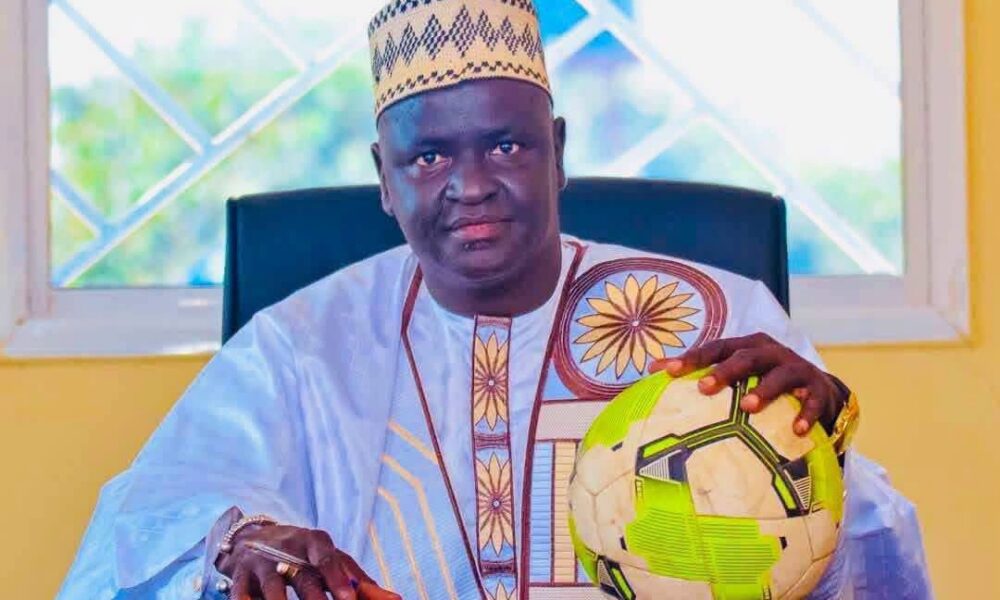

The newly elected President of the Gambia Football Federation (GFF), Kemo Ceesay, has outlined an ambitious transformation agenda for Gambian football, promising major reforms in domestic football, regional development, women’s football and the federation’s engagement with the media.
Speaking to journalists following his election, Ceesay said expectations for his administration should be high, stressing that his campaign manifesto contains strategic priorities designed to address some of the longstanding challenges facing football development in the country.
“Expectations should be really high, not [just] high,” Ceesay said. “If you read the manifesto, there are a lot of strategic priorities with my team that we want to deliver to the Gambians.”
He said the new administration would use the manifesto as a roadmap to deliver what he described as the reforms and development required by the Gambian football family.
A major priority will be the professionalisation of the domestic league, an issue that has generated considerable debate among football stakeholders and supporters over the years.
Ceesay indicated that his administration intends to move towards a fully professional domestic league while introducing broader structural reforms aimed at strengthening football administration and development across the country.
Regional football will also receive increased attention under the new leadership. Ceesay said the GFF plans to strengthen Regional Football Associations (RFAs) and improve administrative and developmental standards outside the Greater Banjul Area.
As part of the decentralisation strategy, he announced plans to establish a dedicated regional headquarters in Jarra Soma to help the federation effectively monitor and coordinate grassroots football programmes in the regions.
“To effectively monitor and coordinate grassroots programs outside the urban center, the GFF will establish a dedicated regional headquarters in Jarra Soma,” Ceesay told reporters.
The GFF president-elect also pledged to introduce dedicated development initiatives for women’s football, while giving greater attention to adaptive football programmes for athletes with disabilities.
Beyond structural reforms, Ceesay stressed the importance of unity within the federation following a closely contested election.
He said the divisions created during the campaign should now be put aside, arguing that the priority must be the collective development of Gambian football.
“The remaining 36 votes, after the election, that is history,” Ceesay said. “Because when I called the two candidates, I was a winner. So having these two people join me, we will be able to achieve what we want in Gambian football.”
He added that the votes secured by individual candidates during the election were no longer important to him, saying the focus from now on should be on working together.
“The 36 votes, for me, is not important anymore. That’s history from today,” he said.
Ceesay also used his first public engagement with journalists after the election to call for closer cooperation between the GFF and the media.
He urged journalists and media organisations to verify information directly with the federation rather than relying on rumours or speculation.
“Media, I don’t want any speculations from your end,” Ceesay said. “If you have any doubt regarding the Gambia Football Federation, come to Football House. We will be transparent and accountable to whatever you want to know.”