
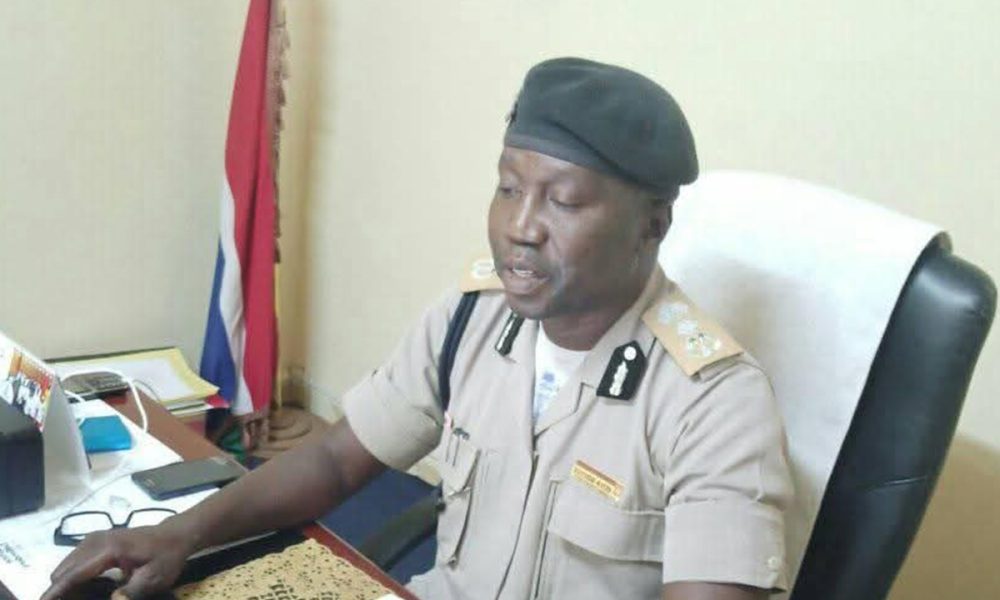



For years, his name has circulated in whispers across security corridors, government offices, and the streets of the Greater Banjul Area. Commissioner Keita Saidy, the Second Deputy Director General of Prisons, is now at the centre of a widening storm of allegations that paint a picture of unchecked authority, intimidation, and systemic failure within The Gambia’s security institutions.
Multiple officials across the prison service, police force, and the parent Ministry of Interior describe a pattern of conduct that they say, “has gone unchallenged for far too long.” At the core of the allegations is a claim that Keita Saidy repeatedly presents himself as a brother to President Adama Barrow, peddling the presidency to silence dissent and instill palpable fear across institutions.
According to insiders, the claim was not treated as idle talk but as a tool of power, one that leaves colleagues, junior officers, and civilians afraid to confront him.
Accounts from both security officials and civilians describe incidents in which he allegedly stepped far beyond his mandate, including mounting traffic checkpoints and confiscating insurance documents and drivers’ licences. These actions, sources say, were carried out despite having no legal authority to enforce traffic laws. Senior police figures are said to have intervened, warning him to stop, but those warnings appear to have had little effect. “Believe it or not, Commissioner Keita Saidy is more powerful than the Director General of Prison, Ansumana Manneh and the Inspector General of Police, Seedy Touray combined” a senior police officer at Kanifing Mobile Traffic Division who begs anonymity told this paper.
“Reports of Keita Saidy’s widespread abuse of power and routine misrepresentation of the President have been sent to both the erstwhile Chief of Staff, Mod K. Ceesay and National Security Adviser, Abubacarr Suleiman Jeng (notoriously called Chemical Ali), but the duo is reportedly petrified by Keita Saidy’s perceived closeness to President Adama Barrow” another senior police officer at Force headquarters in Banjul revealed.
Witnesses also describe a familiar scene: a vehicle cutting through traffic with sirens and flashing signals, motorists scrambling to give way as threats of imprisonment follow anyone who hesitates. For many, it reinforces the perception of a man operating above the law; an all too familiar pattern under Yahya Jammeh’s reign of terror where security officers acted as super human beings. The irony is striking given Commissioner Keita Saidy’s bragging about a former American prison officer, one expected to show restraint and circumspection. Instead, he exudes all the traits of an uncontrollable demon; a serpent in uniform.
Behind the public displays of authority, deeper concerns have been raised about how Keita Saidy rose through the ranks.
Security sources point to longstanding questions about his professional background, including claims that he went absent without leave from naval service after being sent to the United States for short training. His subsequent assertions of having served as a prison officer in the United States remain unverified through official channels, yet they appear to have gone largely unchallenged during his ascent within The Gambia prison service; a service recovering from decades of abuse and dysfunction.
Within Mile II Central Prison, officers describe an environment shaped by fear and division. Several staff members allege that his leadership fostered mistrust, with claims of targeting colleagues and using inmates as instruments of intimidation. Some accounts go further, linking him to one of the most serious incidents in the prison’s recent history; the alleged instigation of inmates to set fire to parts of the facility, including the Security Wing. While no formal inquiry has publicly established responsibility, the allegation continues to surface in independent accounts from within the system.
There are also, troubling reports of internal misconduct, including the alleged humiliation of female officers and the use of perceived political or ethnic affiliations to single out colleagues. For many within the service, these incidents were not isolated but part of a broader pattern that eroded discipline and morale.
Despite the weight of these accusations, officials say meaningful action remains at best elusive. Within government circles, Keita Saidy is widely believed to have cultivated an image of political protection, frequently referencing high-level connections and maintaining a visible presence at State House. To some insiders, this perceived proximity to power has been enough to deter accountability.
Recent claims linking him to controversial decisions in the Ousainou Bojang case have only intensified scrutiny. Sources allege that he played a major role in the release of the Bojang siblings only to later, shift blame onto colleagues. As with many of the allegations surrounding him, these claims have yet to be formally addressed by authorities.

What emerges from these accounts is not just the story of one official, but of a system struggling to enforce its own rules. The consistency of testimonies from across different institutions suggests a deeper issue one where fear, silence, and perceived influence may have allowed misconduct to persist unchecked.
Efforts to obtain official comments from the Ministry of Interior and The Gambia Prison Service were unsuccessful at the time of publication.
In the absence of a clear response, questions continue to mount. For many observers, the case has become a test of whether institutions can confront allegations at the highest levels or whether silence will continue to shield those accused of abusing power?